Anti-Ableist Care: A Disabled Clinician’s Perspective
SLP Summit Jan 2026 – Session Recap
Ableism is deeply woven into systems of education, healthcare, and clinical practice, often in ways that go unnoticed by those working within them. In the field of speech-language pathology, ableism can quietly shape how services are delivered, whose voices are prioritized, and which bodies and communication styles are considered “normal.”
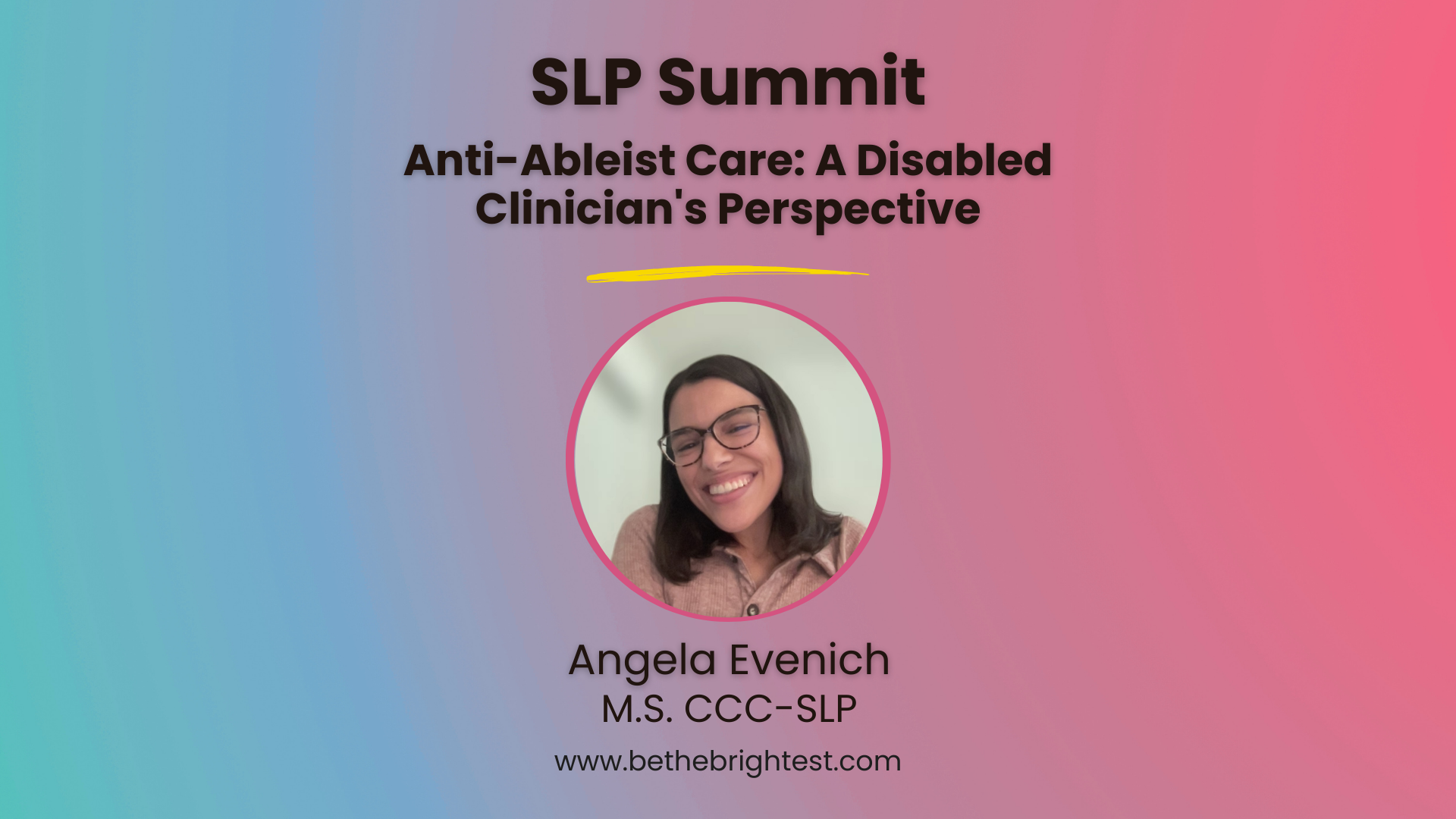
This SLP Summit session, Anti-Ableist Care: A Disabled Clinician’s Perspective, challenges clinicians to pause, reflect, and reimagine their role in creating more equitable and affirming therapy spaces.
Grounded in the lived experience of a disabled speech-language pathologist with cerebral palsy, this course moves beyond theory to explore how ableism shows up in everyday clinical decisions and professional norms.
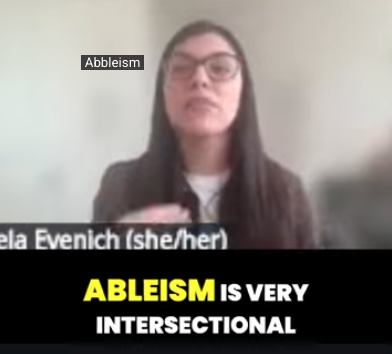
🎥 Watch a clip from the session below
Registration is available until Feb. 6, 2026—register now to access the full course and earn ASHA CEUs.
Understanding Ableism in Speech-Language Pathology
The session begins by examining the historical and ongoing influence of ableism within speech-language pathology. From training programs to clinical expectations, ableist assumptions often define success as conformity, independence, or normalization rather than access, dignity, and self-determination.
Participants are guided through reflection on how these systems impact both clinicians and clients, particularly disabled individuals whose needs and identities may be marginalized within traditional service models.
Lived Experience as Clinical Insight
A powerful component of this presentation is its grounding in lived experience. Viewing the profession through the lens of a disabled clinician offers insight that textbooks and frameworks alone cannot provide.
Through personal reflection and discussion, the session highlights how disability-informed care is not about lowering expectations, but about shifting priorities. It invites clinicians to consider how therapy goals, environments, and interactions can either reinforce ableism or actively disrupt it.
A Framework for Anti-Ableist, Disability-Informed Care
Rather than leaving participants with abstract concepts, this course introduces a practical framework for anti-ableist care that can be applied across settings.
Attendees learn tools to:
-
Identify ableist language and practices in therapy and documentation
-
Advocate for accessibility within clinical and educational environments
-
Reframe therapy goals to honor disabled identities and autonomy
-
Create spaces that prioritize consent, access, and affirmation
These strategies support clinicians in moving from awareness to action, making anti-ableist practice a consistent part of ethical decision-making.
Ethics, Accountability, and Professional Responsibility
This session fulfills ASHA’s ethics and ethical decision-making requirement, reinforcing that anti-ableist care is not optional or peripheral, but central to ethical practice.
By the end of the course, participants walk away with a deeper understanding of how ableism impacts the people they serve and a clearer sense of responsibility to challenge systems that limit access and empowerment.
Anti-ableist care is not about having all the answers. It is about committing to ongoing reflection, listening to disabled voices, and building practices that affirm disability as a valued and valid identity. This session offers both the framework and the invitation to begin that work with intention.
🎧 Check out the full course!
You can register for the SLP Summit through February 6, 2026! Registration is free with an optional ASHA add-on for $29.99 for all eight courses. Courses must be viewed by Feb. 6, 2026 and you must opt in for ASHA credit after each course by Feb. 15, 2026.
🔖 This course was originally presented live at the Jan 2026 SLP Summit.
🕒 Replay Access Ended? You Can Keep Learning!
If you missed registration, we’ve got a perfect next step to support your journey.
👉 The Culture of Disability & Implications for Eating
In this self-paced course, you'll:
-
Examine the ableist foundations of feeding and swallowing therapy
-
Understand disability culture and its relevance to eating and swallowing
-
Explore how racial, ethnic, and disability cultures intersect in clinical practice
-
Identify common cultural assumptions embedded in feeding goals and recommendations
-
Learn practical strategies to incorporate cultural considerations into swallow and feeding therapy
-
Reframe intervention through a disability-affirming, client-centered lens
This course is essential for SLPs who want to move beyond one-size-fits-all approaches and deliver feeding and swallowing therapy that respects culture, autonomy, and lived experience.