Germaine Graham on Bilingual, Family-Centered Care for Deaf and Hard-of-Hearing Kids
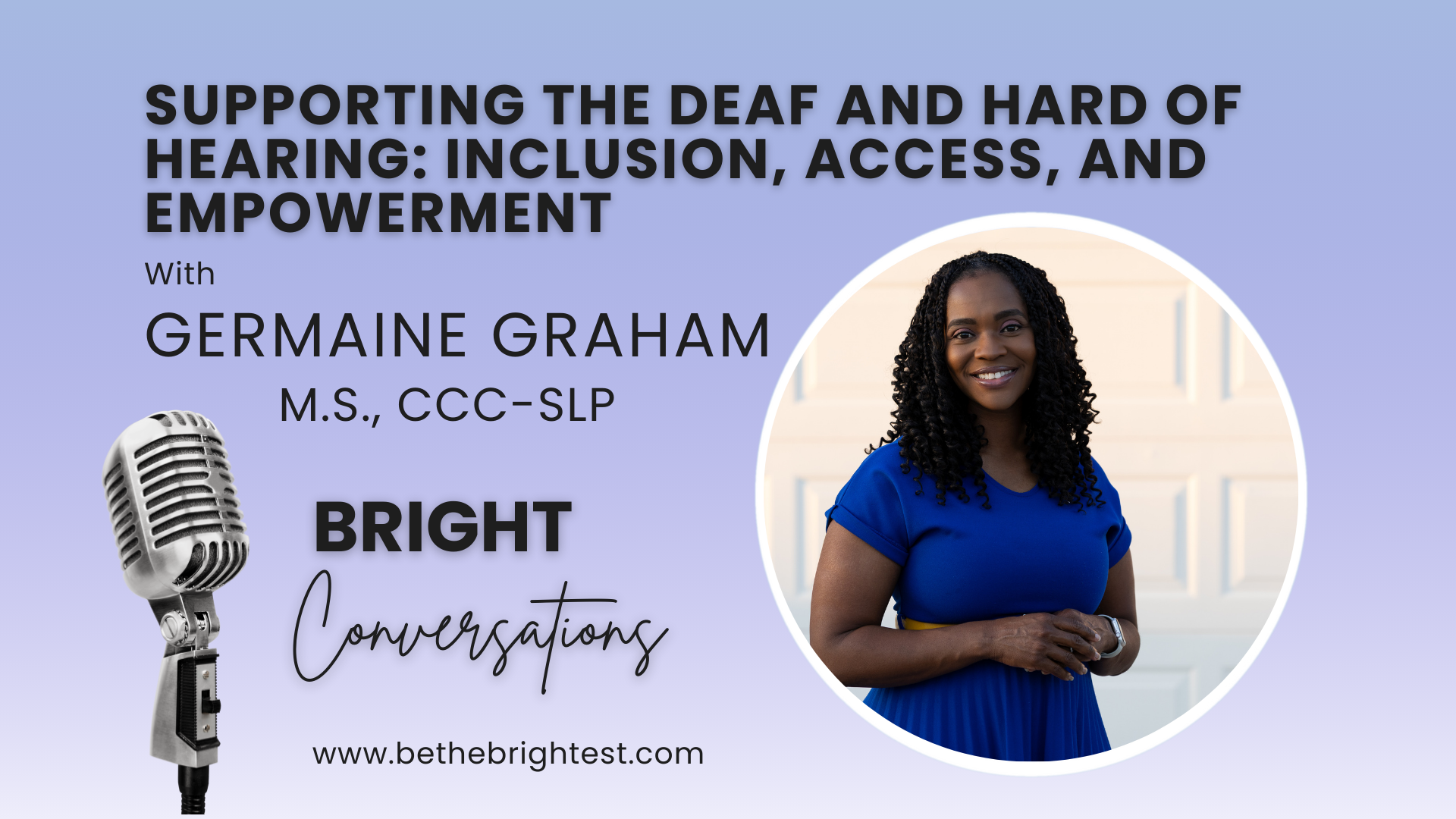
In this post, we are revisiting a Bright Conversations episode featuring Germaine Graham, M.S., CCC-SLP - a bilingual ASL-English SPL practicing in Arizona, and the founder of Deafinitely Communicating, a practice built entirely around Deaf and hard-of-hearing children and their families.
Who Is Germaine?
Germaine's approach to this work is personal as well as professional. As the parent of a child with disabilities, she brings a caregiver's view to therapy planning that shapes everything her practice does - from in-home and community-based sessions to telehealth, delivered across Arizona. Her guiding principle is a bilingual model that develops both ASL and spoken English side by side, so a child can move fluidly between home, school, and community without having to choose one language identity over another.
She's also known for keeping goals grounded in real life. Rather than therapy objectives that look good on paper but don't transfer anywhere, Germaine builds plans around what she calls achievable and functional outcomes - the kind of progress a family notices at the dinner table, not just on a quarterly report.
What Is This Episode About?
In this conversation, Germaine talks through what a truly bilingual, family-centered approach to DHH therapy looks like in practice: how she builds trust with families who are often navigating a new diagnosis and a new language at the same time, how she collaborates with early intervention teams and schools to keep goals consistent across settings, and how she thinks about customizing therapy to a child's individual strengths rather than a one-size-fits-all model.
This conversation is aimed squarely at practitioners who want to move past generic "inclusion" advice and into the specifics of what bilingual DHH support actually requires ... the language planning, the family partnership, and the everyday judgment calls that don't show up in a textbook.
Who Should Listen?
If you're an SLP with DHH students or clients on your caseload, an early intervention provider, or a school team member trying to figure out how ASL and spoken English goals can coexist rather than compete, this episode is built for you. It's also a genuinely useful listen for anyone newer to DHH work who wants to hear how an experienced bilingual clinician actually thinks through a case.
One theme worth listening for in particular: Germaine's collaborative model. Bilingual, family-centered care doesn't happen in a vacuum. It depends on early intervention teams, school-based providers, and families all working from the same page, often across settings that don't naturally talk to each other.
The episode is live now, and you can watch for free or pay $7 to receive PDHs/ CEUs for viewing. Keep an eye out for an upcoming course spotlight that picks up right where this conversation leaves off: bringing DHH-informed practice into the classroom curriculum itself.