From PDA to Masking
If you have been learning about PDA - Pervasive Drive for Autonomy - you already understand the nervous system is working overtime. Demand avoidance is not a behavior choice; it is a survival response. The PDA child is doing everything they can to feel safe in a world that often feels unsafe.
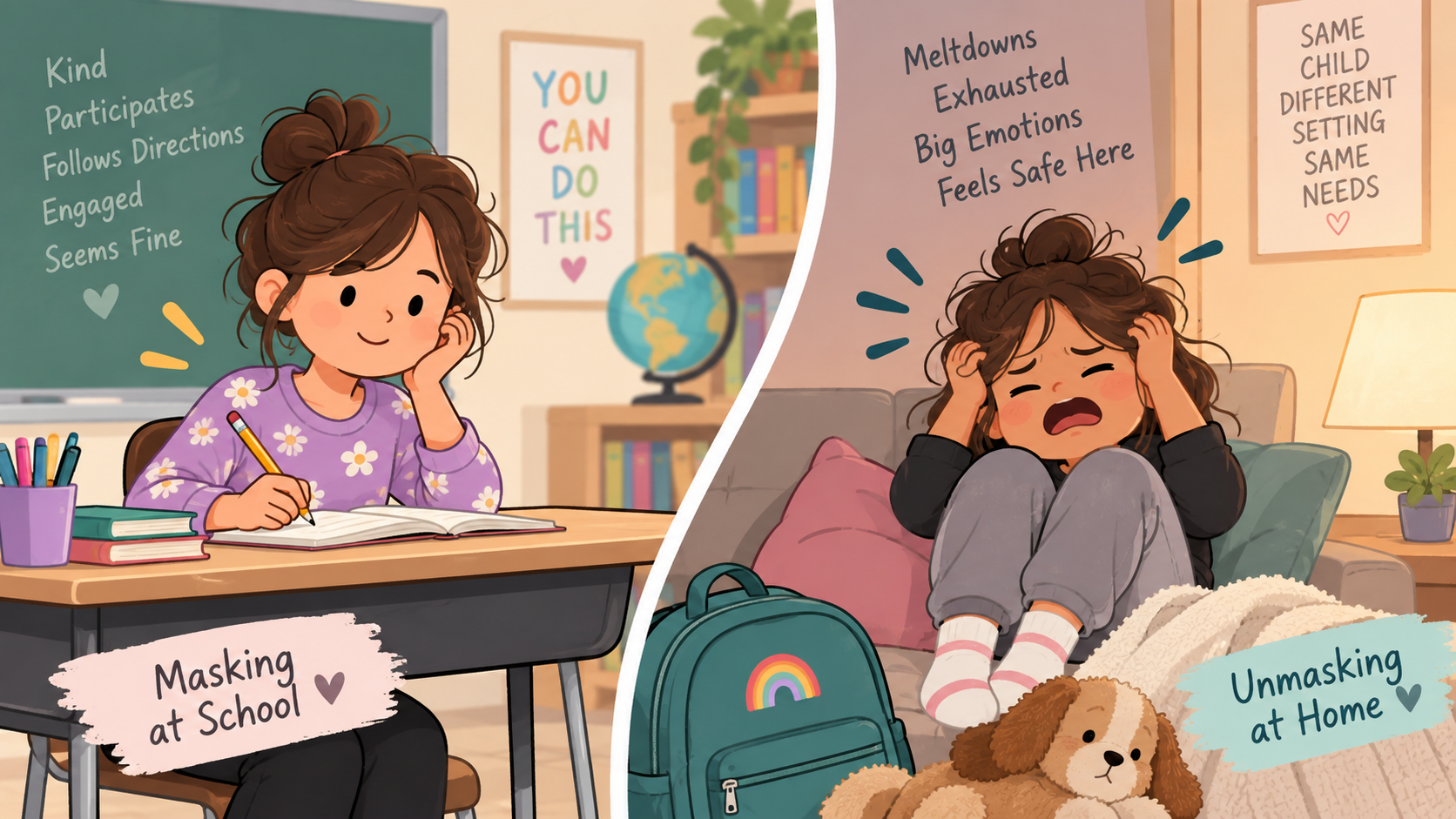
Here is something many providers and caregivers discover next: the child who is fiercely pushing for autonomy at home is often the same child who looks completely fine at school. Compliant. Engaged. Even easy to manage. Then they come home and fall apart.
This is masking, and when combined with PDA, it creates a double layer of exhaustion that your child is quietly carrying every single day.
What Is the Connection Between PDA and Masking?
PDA is a nervous system response that drives demand avoidance as a means of maintaining a sense of safety and autonomy. Your child is not being defiant - they are surviving.
Masking is a parallel survival response. It is when neurodivergent individuals adapt how they present, communicate, and behave in order to appear more neurotypical and avoid social consequences. As Dr. Destiny Huff describes in her Bright Ideas Media course, The Cost of Masking:
Masking is when neurodivergents adapt to the environment around them socially - via their communication style or behaviorally - to be more socially accepted by neurotypical peers and to conform to adults’ expectations.
Children with PDA profiles often become exceptionally skilled maskers. Why? Because their nervous system is finely attuned to threat, which includes social threat. They read the room. They learn very early what earns approval and what invites correction, so they develop an elaborate social performance to keep the demands at bay.
The After-School Meltdown Is REAL
If your child seems perfectly regulated at school and then completely falls apart the moment they get home, this is one of the most common and misunderstood patterns in neurodivergent children. Dr. Huff explains this directly:
When they’re decompressing, the mask is coming off and all the dysregulation they were holding in is coming out. They are putting all of their energy into those four, five, six, eight hours in that school building. And when they’re home, that’s their safe place.
Home is where your child trusts that you will still love them even when they stop performing. That is not a failure of your parenting. That is evidence of your relationship.
For children with PDA profiles, this pattern is even more pronounced. They have been suppressing their demand avoidance instincts all day, white-knuckling through transitions, requests, group work, and social interaction. By the time they reach your car, the resources are gone.
Why This Matters for Parents
When you understand the relationship between PDA and masking, several things start to make sense:
• Why your child seems like “two different kids” at home versus school
• Why teachers and professionals sometimes dismiss your concerns because they do not see what you see
• Why your child is so exhausted (they are performing all day and then crashing)
• Why homework and after-school activities can feel impossible… there is simply nothing left
• Why weekends and school breaks often bring significant improvement in mood and regulation
As Dr. Huff puts it, the school knows the learner in the classroom. You know this learner in every other setting. Both perspectives are essential. Both are valid.
What Comes Next
In our following articles, we are going to go deeper into masking… what it looks like, the real cost it carries for your child’s mental health, and most importantly, what you can do to create environments where your child does not have to mask to be safe.
Understanding masking is not about adding another thing to worry about. It is about finally having language for what you have been witnessing and a clearer path forward.
A Note on Awareness vs. Acceptance
Simply knowing that neurodivergent children exist is not what reduces masking. What reduces masking is acceptance - genuinely affirming environments where a child does not need to hide who they are to be welcomed, valued, and safe.
That shift from awareness to acceptance begins with parents like you who are willing to learn, to question the systems around their child, and to advocate fiercely for something different.
This article is based on content from Dr. Destiny Huff’s course, “The Cost of Masking: Supporting Neurodivergent Learners’ Needs”. Dr. Huff is a licensed professional counselor, certified trauma therapist, and non-attorney special education advocate.