How Rachel Madel changed our thoughts on AAC progress
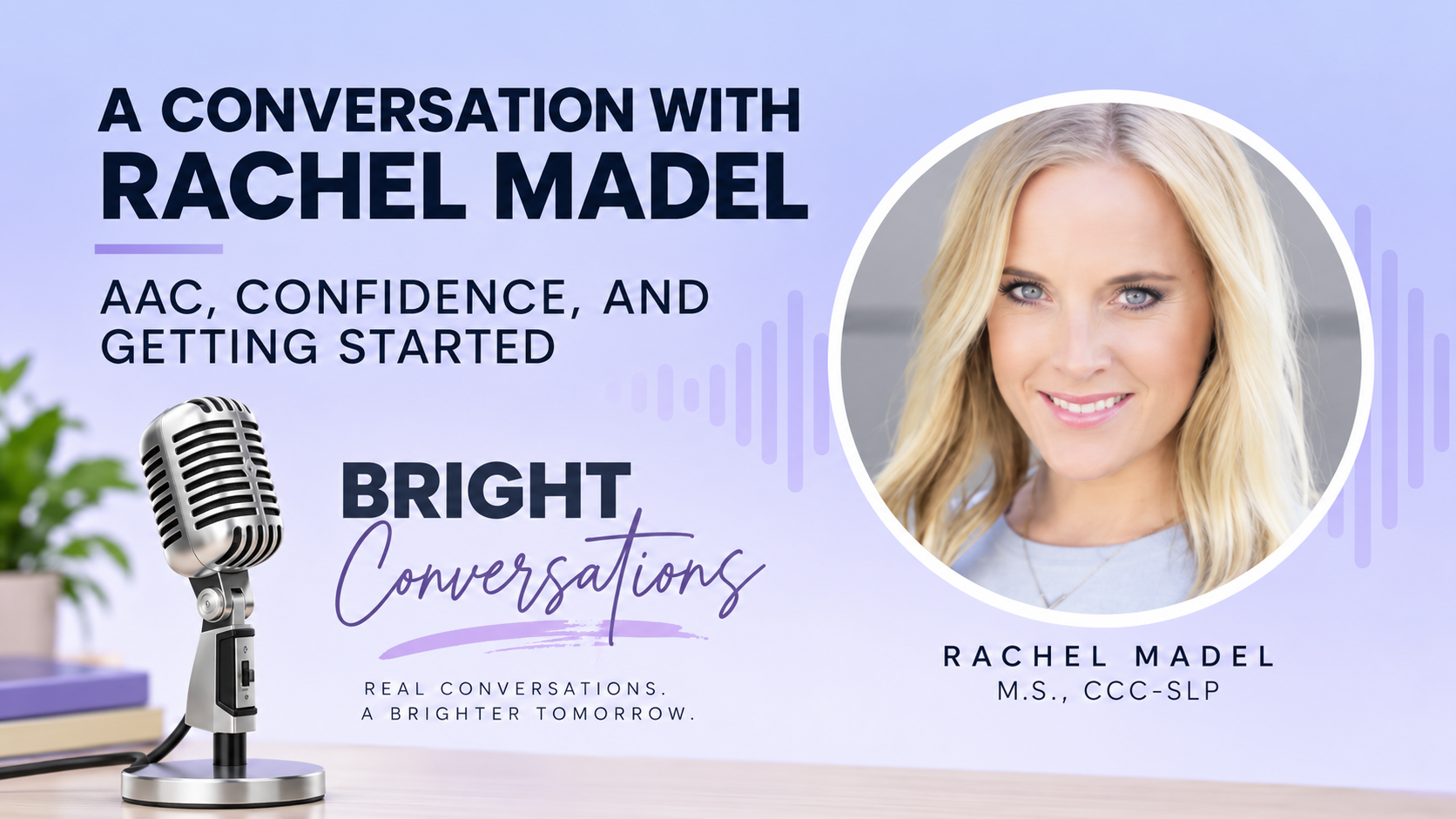
A few weeks ago, we sat down with Rachel Madel for an episode of Bright Conversations. We were talking about the fear that keeps so many school-based SLPs from getting started with AAC. The overwhelm. The imposter syndrome. The feeling that you’re not expert enough to introduce a device, so you wait. You wait for a formal assessment. You wait for the right system. You wait until you know enough.
And Rachel said this:
If it’s between the wrong AAC and no AAC - go with the wrong AAC. Because eventually, we can change the system or make it better. But if we have nothing, then we’re letting months and years go by where a student doesn’t have access to communication.
She said it simply ... like it was obvious. But, I think for a lot of school-based SLPs, it’s the exact permission they’ve been waiting to hear from someone with Rachel’s level of expertise.
The Cost of Waiting for Perfect
Rachel has been doing this work for a long time. She owns a private practice in Los Angeles, hosts the Talking with AAC podcast (nearly 2 million downloads), and has trained SLPs across the country. She’s done the assessments, she’s worked alongside specialists, she’s seen what happens when kids get access early - and what happens when they don’t.
And what she’s seen is this: the pursuit of the perfect system often results in no system at all.
An SLP who doesn’t feel like an AAC expert holds off on introducing a device. Weeks pass. Months pass. The student spends another year in a communication vacuum, not because AAC wouldn’t have helped, but because the adult in the room was waiting to feel ready.
I’ve never met a student who wasn’t ready,” Rachel said. “I think we have to reframe that idea. Sometimes it takes a long time. But without the belief that this student will learn how to communicate, we’re setting them up for failure before we even try.
The “not ready” conversation, she pointed out, is almost always more about the SLP than the student. The more insecure a clinician feels about AAC, the more likely they are to find reasons to wait. This isn’t a criticism. It’s a structural failure. Most SLPs graduate with almost no AAC training and are expected to figure it out on the job.
What Getting Started Actually Looks Like
Rachel’s advice for the SLP who wants to do right by a student but doesn’t know where to begin is refreshingly practical:
- Start with low-tech. Pull out a choice board or a core board. If you have access to an iPad, download a free trial of an AAC app - most major companies will give licensed SLPs access. You don’t need to know the whole device. You need three pages and two motivating words.
- Model without expecting anything back. Use the device yourself during a session. Say the word, touch the symbol, then move on. No prompting. No waiting. Just showing.
- And here’s the part Rachel emphasized that I keep thinking about: doing it before the formal assessment doesn’t slow the process down - it speeds it up. When an AAC specialist walks into an evaluation, and a student has already had some exposure, the whole assessment is richer. The SLP has data. The family has already seen the device in action. The student isn’t starting from zero.
You’re not overstepping by getting started. You’re doing exactly what your student needs.
Listen to the full episode with Rachel Madel on Bright Conversations www.bethebrightest.com.