Perspectives in Practice: Bridging the Gap to Strengthen Supervisor Connections
SLP Summit Jan 2026 – Session Recap
Supervision is one of the most influential relationships in a speech-language pathologist’s career. It can be a source of growth, confidence, and professional identity or a point of tension, confusion, and burnout. Yet, despite its importance, supervision is rarely discussed with the nuance it deserves.
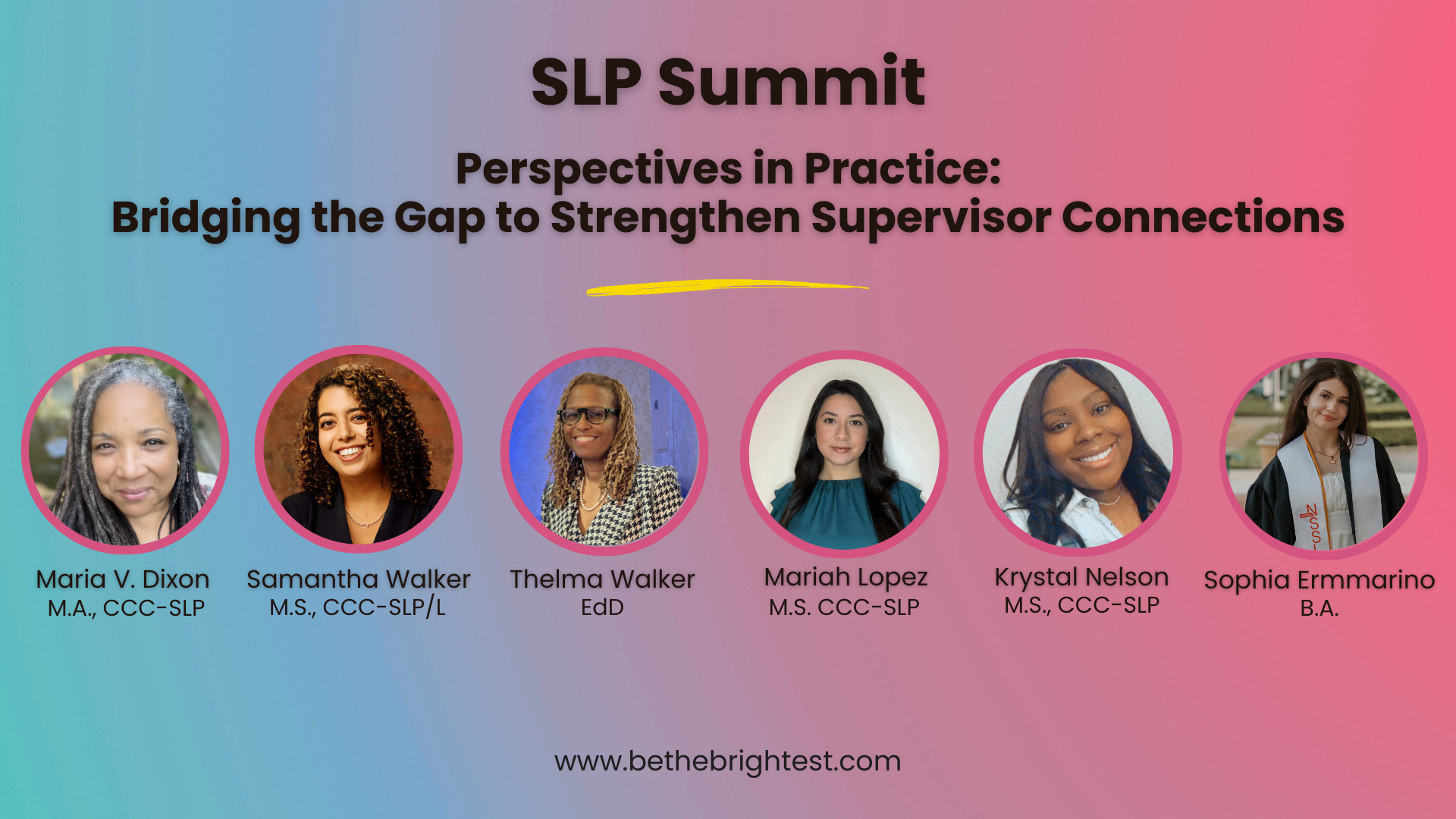
In this SLP Summit panel, veteran supervisors, recent graduates, and a current graduate student came together to unpack what actually makes supervision work. Through honest reflection and shared experiences, the panel highlighted how effective supervision is built not on hierarchy, but on communication, trust, and mutual learning.
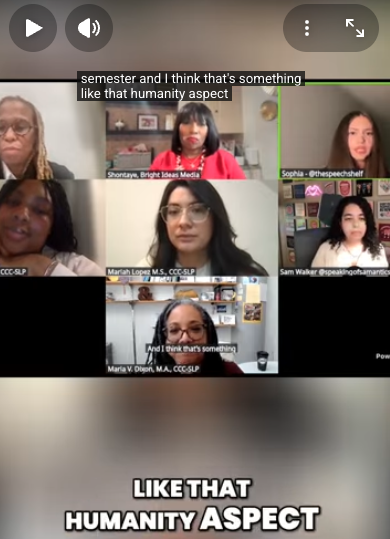
🎥 Watch a clip from the session below
Registration is available until Feb. 6, 2026—register now to access the full course and earn ASHA CEUs.
Supervision Looks Different at Every Career Stage
One of the clearest takeaways from the panel was that expectations of supervision change depending on where someone is in their professional journey.
Graduate students and early-career clinicians shared the importance of clarity. Knowing what is expected, how feedback will be delivered, and where support is available can make the difference between confidence and overwhelm. Unspoken expectations, inconsistent feedback, or unclear boundaries often create unnecessary stress.
Veteran supervisors reflected on how their own supervision experiences shaped how they now lead others. Many acknowledged learning “on the job” and emphasized the importance of remaining flexible, reflective, and open to growth, especially as the field and workforce continue to evolve.
Communication Is the Foundation
Across generations, communication emerged as the cornerstone of effective supervision. Panelists emphasized that strong supervision does not rely on constant correction, but on ongoing dialogue.
Effective supervisors:
-
Set clear expectations early
-
Normalize questions and uncertainty
-
Provide feedback that is timely, specific, and actionable
-
Invite supervisees to reflect and self-assess
From the supervisee perspective, feeling safe enough to ask questions, make mistakes, and express concerns was consistently identified as essential. When communication is rooted in respect rather than fear, learning accelerates.
Navigating Power, Trust, and Vulnerability
Supervision inherently involves a power dynamic, and the panel did not shy away from this reality. Instead, speakers discussed how power can be used responsibly to foster growth rather than control.
Trust was repeatedly identified as a key factor. Trust is built when supervisors are transparent, consistent, and willing to acknowledge their own learning edges. It is also strengthened when supervisees feel seen as whole professionals, not just checklists of competencies.
Several panelists noted that supervision works best when vulnerability is allowed on both sides. Supervisors do not need to have all the answers, and supervisees should not be expected to perform perfection.
What Helps and What Hurts
The panel offered candid insight into practices that support strong supervision and those that undermine it.
Helpful supervision practices included:
-
Regular, protected supervision time
-
Clear documentation and goal-setting
-
Collaborative problem-solving
-
Strengths-based feedback
-
Cultural humility and self-reflection
On the other hand, supervision breaks down when feedback is vague, expectations shift without explanation, or supervisees feel they must “figure it out” alone. Several speakers emphasized that silence or avoidance can be more damaging than difficult conversations.
Supervision as a Relationship, Not a Requirement
Perhaps the most important theme to emerge was the idea that supervision is not just a requirement to be completed, but a professional relationship that shapes how clinicians show up in their work long after the supervision period ends.
When supervision is intentional, reflective, and human-centered, it creates ripple effects. Clinicians who feel supported are more confident, more ethical, and more likely to become thoughtful supervisors themselves.
This panel served as a reminder that supervision is not about checking boxes or asserting authority. It is about creating space for growth, honoring lived experience, and building a profession that supports learning across generations.
For supervisors and supervisees alike, these conversations offer both validation and a call to reflect on how supervision can be done better, together.
🎧 Check out the full course!
You can register for the SLP Summit through February 6, 2026! Registration is free with an optional ASHA add-on for $29.99 for all eight courses. Courses must be viewed by Feb. 6, 2026 and you must opt in for ASHA credit after each course by Feb. 15, 2026.
🔖 This course was originally presented live at the Jan 2026 SLP Summit. Captions available on replays.
🕒 Replay Access Ended? You Can Keep Learning!
If you missed registration, we’ve got a perfect next step to support your journey.
👉 Authentically Me: Acknowledging Identity in Clinical Supervision Relationships
In this self-paced course, you'll:
- Explore how intersecting identities influence supervision relationships
-
Examine positionality and power within clinical supervision
-
Reflect on personal identity and how it shapes professional interactions
-
Learn strategies for integrating student identity into supervision practices
-
Build skills for working across lines of difference
-
Develop approaches to mitigate conflict by acknowledging lived experience
This course is ideal for supervisors seeking to deepen self-awareness, foster inclusive supervision relationships, and engage in culturally responsive practice that honors identity as central to professional growth.
👉 Ghost the Delushonship, No Cap: Supervision of Generation Z in the SLP workplace
This course is designed for speech-language pathologists (SLPs) in supervisory positions seeking to understand the priorities and tendencies of members of Generation Z (born 1995–2010). By gaining an understanding of Generational Theory, supervisors of Generation Z will learn strategies to work across generations, as well as understand their own biases and how those may influence the supervisory relationship. Case studies will be used to illustrate real-life applications of the theory.
This course was part of SLP Summit July 2025 and satisfies the ASHA supervision requirement.
This course also offers an additional downloadable resource for purchase with bonus content:
✔️ An overview of Generational Theory
✔️ Practical supervision strategies
✔️ A Gen Z glossary (yes, really)
✔️ FAQs and reflection prompts to take the learning deeper
Purchase the supplemental resource here.