The Origin Story of SLP Summit: Building Community, Connection, and Confidence
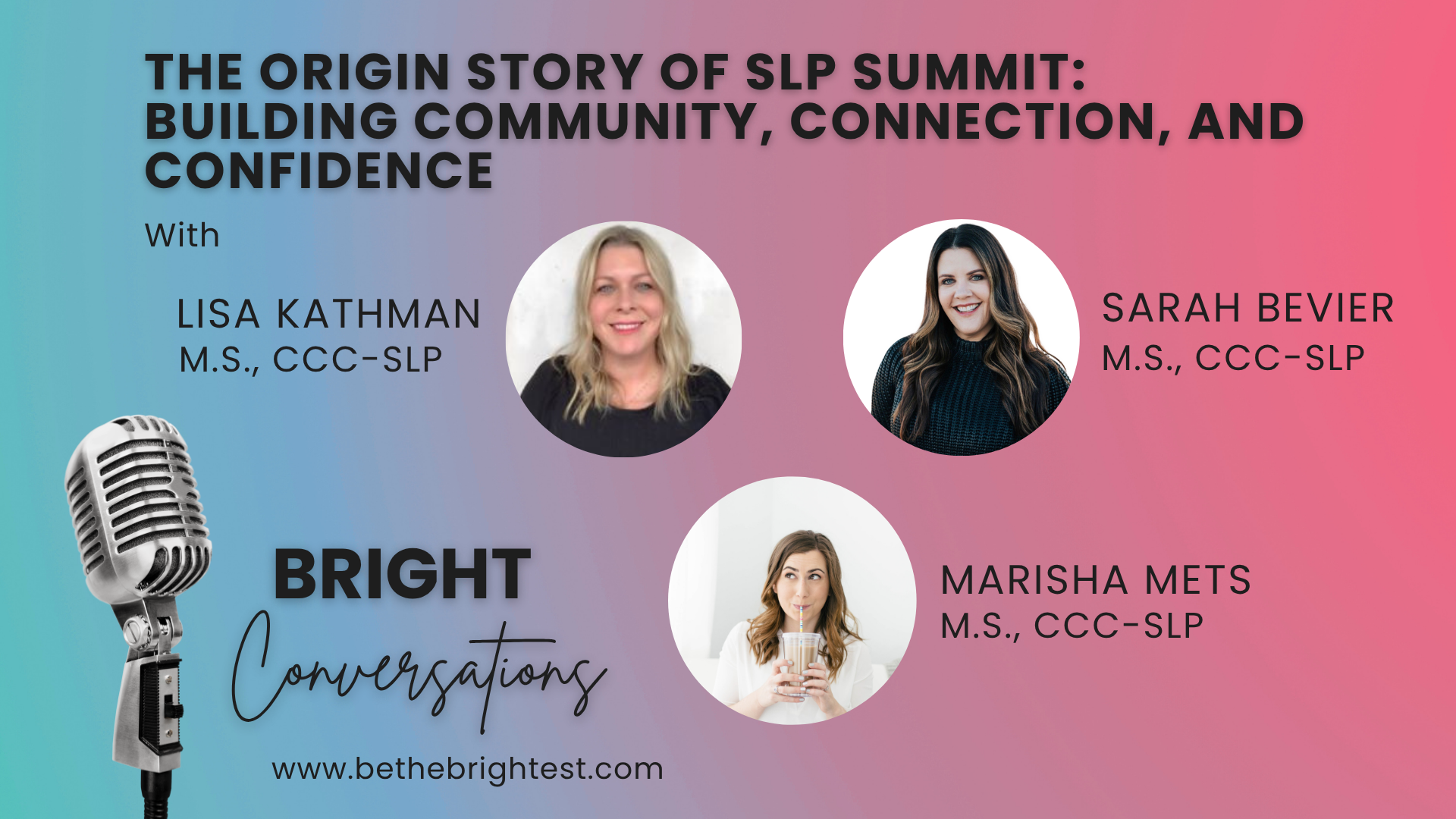
🎧 Bright Conversations – A Podcast by Bright Ideas Media
Join us for real, relevant conversations with industry leaders, past presenters, and change makers across the SLP and special education space.
📖 Read the Episode Transcript
Scroll down to read the full transcript from today’s episode.
▶️ Watch the Video
Click here to watch the full episode on our site for free
🎧 Listen on Your Favorite Platform
Listen on Spotify
Listen on Apple Podcasts
Transcript of “The Origin Story of SLP Summit: Building Community, Connection, and Confidence” – Bright Conversations Podcast
Hello, and welcome to a very special episode of Bright Conversations. I'm Shantaye of Bright Ideas Media, and today I have the honor of hosting the founders and creators of SLP Summit. As we are getting ready for the 9th year, which is crazy to think of. Um, we felt like it was time to just sit down and learn a little bit more about the origin of the conference and the people behind it. And we know how much everyone looks forward to this conference every year, so we wanted to chat with the ladies, the sponsors, and talk to them about, why did you even think that this was a thing?
Did you ever think it would become such a big thing? So we're super excited. Today, we have Lisa Kathman and Sarah Bevier of SLP Toolkit, and we have Marisha. Oh my gosh, I'm blanking. Marisha… On your last name.
Marisha Mets. Mets from SLP now. So, we're excited to talk to you all, and I want to start by just talking a little bit about each of you and where you became first familiar with the field of speech pathology and how you got started working as a speech therapist. So we'll start with, uh, we'll start with you, Sarah. With me?
Okay. Um, well, I always was going to do something in the field of communication, because talking's my only talent. And so, I thought broadcasting? But, like, I mean, that's a pipe dream, right? Like, who's gonna put me on the… TV.
Um, so I started in communication, and then was looking into, like, I don't want that just, like, broad degree. that I don't know what my career would be with. So I started looking at what communication jobs, and found… I hadn't… I never… I don't think I'd ever known a speech pathologist. or even really much about the field, and then I started reading it, and I thought, that's it. Like, absolutely what I want to do.
If I can help other people with their communication. Perfect for me. Yeah. In answer… Awesome. That's kind of familiar, though.
I think a lot of SLPs consider doing, um, television broadcasting or some sort of journalism, and then landed in communication disorders, so… Not too rare, but uh, how about you, Marisha? What's your story? Um, so I… flip-flop my major a bunch in undergrad, um, but I landed on psychology, And I was loving that, and I was do… but I was working in a research lab, and I was just struggling with, like, the… fluffiness of it. I was like, I'm doing a cool research study, but, like, It's gonna end up in a journal, and then what? Like, not that it ended up in a journal, but I was just envisioning Um, what it would be like to go down, like, the research psychology route.
Um, but then I studied abroad, and Um, I was taking, um, like, a Dutch course, and we had the opportunity to work with a speech-language pathologist there, and it was for accent reduction. Which… and I loved, like, I never did anything with accent reduction, but I loved how concrete it was. And I was like, ooh, this might be the answer to what I was looking for. So I researched what SLPs did. Um, and that was the summer before my senior year, and then I reached out to the, like, um, the counselor, guidance counselor, academic counselor.
Um, of, like, how can I get this fit into one year? And then I did it all. Um, and the rest is history, but… I just… yeah, I really resonate with… Um, I thought I wanted to do adult medical stuff, but I just ended up loving the kid stuff, it's just such a fun way to… Support the kiddos, and… Um, the schools are the best. Yeah. You just reminded me, too, you speak more than one language, right?
Yeah, so I, um… at the time, I was considering, like, doing my PhD in Belgium. And Dutch is my first language, and I was born in Belgium. Um, but I needed to have, like, that credential to be able to… take Dutch, um, like, to sign up for a program in Dutch, and so that's why I was in. The Dutch course. Gotcha.
Cool. All right, Lisa, how about you? Well, first I want to answer Sarah's question of who would put her on TV. It would be Bravo. Oh, that is… I did have a tummy.
And then, what season was that, that people still will reach out and say, did I just see Sarah from SLP Toolkit on Million Dollar Listing? Really? What? Which is the greatest? Yeah, sometimes when there's a rerun.
My 5-second cameo, I did have one speaking line. I mean, it wasn't alone. It was just me. Were you buying a million-dollar home? Was that what we… And my cousin was Madison, who was in the, like, original first five seasons, and so it was like a family dinner.
And they had the cameras there. It was… Amazing. Uh, anyways, my story, I always feel like when I hear all of these inspiring stories, I always think of how uninspiring mine is, and, like, random, and… like, I hate even sharing it, because I'm like, everyone's like, oh, I had, like, a sibling with special needs and was surrounded by therapists, or I had, like, all of these, like, beautiful. origin stories, and mine is… that… I mean, I guess I had… I call her, like, my little speech angel. My first job ever in… college.
I started out, um, not really knowing what I wanted to do other than I was really a good student, I knew I'd go to grad school and something, but I didn't know what. But, um, I worked in this furniture store in the mall in Hickory Hollow Mall in Nashville, Tennessee. And it was one of those stores, which… like, back in the 90s. like, you would pay less that was cheap and not leather, and then you had, like, the real leather stores. But then they had this, like, random in-between one called Life Stride, which wasn't real leather, but wanted to charge leather prices, so people would come in, do, like, a lap, and… you'd never see him again.
They'd look at a price tag, and they'd be gone. Like, I mean, I'm not gonna pay that for not leather. So… she did her lap, and then she came up and just started talking to me, and then after a minute, was like, you know, what are you studying? What do you want to be? And at that point, I didn't know.
I was, like, 17, and… you know, didn't know a lot of things, and she was like, you have a really, like, great personality. Have you ever considered speech-language pathology? And I was like, no, I've never even heard of that. And so, um, we finished out our conversation, and. I ended up getting an undergrad in psychology, and they didn't have an SLP program in Florida, so I moved back with my folks.
in Arizona, but it was one of those things where I still wasn't sure even what being an SLP was. But I was like, that's what I'm gonna be, somebody… some rando told me in a shoe store, because, you know, that's what you do with your life. And so I literally… was like, well, I'm done with my undergrad, I want to move back with my parents, the only college is Arizona State, where they live. And, um, I had no idea, like, that it was even competitive. to get into a program.
And again, I was a good student, I had that, like, going for me, but, um… I was like, it's a state school, like, I'll get in. It's the only thing I applied to. I got in, had no clue, I had to do all of the… they call them deficiencies back in the day. But now they're called leveling classes, but those were the worst. I almost dropped out of school because I thought that I was so.
bored by that, but once I actually got into the grad. courses. I thought it was amazing. But like you, Marisha, I thought I was going to work with adults, and it's funny how life kind of shows you a different path, and I can't even imagine. not working with kids, in schools, like, I think it's the greatest, like, most under, um, represented from, like, a reputation standpoint.
placement out there, because the access that we get to kids is unparalleled, unless you are, like, a live-in. Good idea, actually. speech path with a family. I don't know if that exists, but… Probably pretty lucrative, too. Okay, so take us back to, um, 2017.
What was happening? How did you three connect? We know that… Lisa and Sarah, you were together already, working on SLP Toolkit, but how did you reconnect? What was happening in the world of speech pathology, and what made you think, like, we should… put this conference on for everybody. Bertie, do you want to talk about how we met?
Well, so you two had a conference like, an in-person event. And I think I had connected with Anne Page rented out the cafeteria. something, and then she's like, you should come to this! And so I, like… flew from where… because I was living in Washington at the time. So, I guess we first met at your event.
That's right. And then… Yeah. That's what's so funny, too, is, like, Lisa and I had… Lunch Toolkit. And within the first few months, we were like, we should host a conference in person. Like.
Why not? Let's just throw that together. And it was a great success. It was actually very, very cool. Why not?
Okay. Um, and so you would think, naturally, then that just led into SLP Summit, but not… Quite yet. So… Marisha and I had gone to Starbucks. And we're doing, like, a, you know. hang out, but also, like, chatting about business stuff, because we were… we had both early days of business starting.
And kind of talking about some different things, and… had… I think I had just gone to… an online conference. with other people, and they were these, like, short one-hour courses that gave me information. It was not in our field at all. It was like a business conference. And I remember thinking that was so cool.
And so I had… I think I had told you about it, and then. It literally just, like, spiraled into, we could do that. we should do that. Because I think… I know for Toolkit especially, we needed… to educate people on what the benefits of the app were. Like, it wasn't just that we.
needed to just have great marketing, and people would go, oh, I want to buy it. It was kind of a novel idea at the time to go from this paper and pen data collection to using an app, and then, you know, had some other features in there, too. And so I thought, if we could get in front of people and show them, you know, like, what this would look like. And so it kind of… That was kind of how it started, right, Marisha? Did I miss anything?
Yeah, and I think I was also… because Like, we went to so many PD courses that were just, like, not practical and relevant and kind of boring, and you always had to… Because I remember, especially as a newer SLP, like, I was excited to go to ASHA, but then you would, like, Look at the price of… just the ticket. to, like, to register, and then the flight, and the hotel, and then… oh, but I'm gonna be away from home for this long, and… just all the things, and it was… like, I don't know, PD didn't feel very fun back then. Yeah. It was always, like, so theory-based. And I'm like, no, I just need you to tell me what to do tomorrow.
more accessible. Right. Yeah, give me something practical I can take away. Because I don't… Yeah. when there would always be some courses like that, I think at ASHA, that you'd have, like, you'd go to all of them, and then you'd pop in, but a lot of them were research-based, and then come to find out.
that there is… I don't know anything, I have no PhD, and don't really know a lot about it, but don't they have to get a. certain number of hours in front of people. Like, I feel like that's part of, like, I don't know if it's their job, it's because it's post-PhD, so that is… and then I think the way that ASHA. also selects people, and I don't know… currently, if it's changed. But, you know, especially back then, it was a lot of.
PhDs that presented, and you had a selection committee that, even now, I think that changes every single convention year. So even, Sarah, when did you and I. Yes, that's true, because that's… I do remember it was so hard to get accepted. We got… we got lucky on that one, I feel like. present our first ASHA, was that… right before Summit, or the… after… So… Well, we got accepted the first time, it was… really well received.
It was… we had a full room, which held 300, and an overflow. And so we left there, like, high-fiving, like, it was exciting, we got great feedback. And then the next year, we're like, oh, well, great, like, you know, we did this course, it was well received, let's go ahead and put in to do another. So we put in, like, 3 different options, and we're offered. um, poster sessions for each.
And I was like. I don't get it. First of all, like, a poster session to me is probably. better suited to research than it is to actual presentations, and then there just weren't a lot of. courses, period, that felt relevant.
to working in the schools, and I think that was the key thing that I heard from both of you, too, is that, you know, you could get PD. It was expensive. Sometimes, even if you didn't have to travel for it, I'd get those. Yeah. pamphlets in the mail, and you'd spend, like, $500 for a one-day workshop, and I didn't have that money, and I couldn't travel, and I couldn't leave home, and… and then you didn't even know, like, with that $500, would it even be something that made sense.
to your role that you could use. So. It was a lot of… and then I think, again, coupled by all of us being early in our businesses, we're… You do get that mentality of, like, why not? Like, we want it. Ash is not giving it to us, so let's just create it.
And I think a lot of great business ideas, period. come from that of, like, you're searching for something. that you don't find, so you're like, well, I guess I'll just… do it then, and then that's how people become serial entrepreneurs, I think, too, because it's just… you keep looking for things that, you know, if there is a great solution, great. Yeah. Yeah, if Ashley doesn't want us, we'll do our own.
Yeah. It sounds… But at the time. Cool, yeah. Never, never put in to submit again. Yeah, 100%.
at ASHA. It sounds like it was a combination of seeing a need, but also wanting to showcase your individual business products. And also wanting to give something to everyone that felt more relevant. a lot… I remember working in schools, too, and oftentimes the PD that was available to you in the school wasn't always relevant to the students or the population that I might be working with. And then the same thing about going to an all-day in-person event, you may get a lot of theory, and then I would end up feeling like I can't… What do I do with it?
For Part 2, when you actually learn about the therapy, and that's really why I'm here. And so, one of the things that I remember early on when I first took a course in SLP Summit was that I could do it at home. In my kitchen, on my iPad, while I was making dinner, and, um, I'm listening, and I'm like, oh, okay, this is cool. I don't think I can finish it. And I could come back later, And watch the replay.
I'm like, This is perfect! I don't even have on real clothes. This is awesome! Yeah. We wore pajamas for one of our presentations, didn't we?
Yeah. Well, and I always think, too, like, one of the issues that we found with… with. Because… some of the other PD, and again, I keep saying ASHA because that was our kind of barometer then. I think the world has changed a lot in the 9 years that we've been doing this, but. Um, we always found it very interesting that we would… get put into that bucket, and same, like, I feel like people who are on TPT and other sellers, like, you… You're just selling your product.
You're… that's all you're doing, is this is, like, one big, like, infomercial, whatever. And we used to talk about, you know, I think it's so interesting that. And I am not hating on these people at all, but I think, like, you know, even Nina, stuttering Therapy Resources. Yeah. They are giving you information, but, you know, they want you to obviously buy a book or whatever at the end.
That's not. why they're doing it. They're doing it to share the information. And for whatever reason, people that weren't in that kind of really… and they're the ones, too, I think, that get, like, the… the fellows and all of that kind of stuff, and I think of some of the game-changing things that everyone on this call has done. Yeah.
for this field, and I always think it's interesting, like, you know, again, another example that I remember back in the day was Michelle Garcia Winter in Social Thinking. Like, it was cool to bring her in to talk about all of social thinking, and that at the end, you knew you could buy her products and everything. But why wasn't that the same for people who were practicing and solving the problems that they were seeing in their specific niche, which. for all of us is… is, um, schools. And I think a lot of the TPTers were working in schools, and they're like, that's great!
There's that stuff out there, but it doesn't apply to my job and my kids, and so I have to create it. Um, so there's that disconnect, too, that I never really understood why we got. pushed as, like, not… credible, almost, at first. Mm-hmm. Yeah.
Maybe even now, still. Yeah. Yeah. I mean, in the world of Africa. Yeah.
What? And I feel like maybe we're getting more of that feedback now than we used to. Because I feel like at the beginning, it was… I don't know, because that was… this was the first… Yeah. thing like it, and it was free and, like, actually helpful. Um, but I don't know, and I think it's interesting… uh, like, what you're saying too, Lisa, because, like, everyone that we've invited is, like, very mission-driven.
Like, I don't think we started our businesses to get rich. We started the businesses because We saw a need, and we were struggling with something. Like, I think we're all trying to solve our own problems that we're encountering, and we want to make it easier for SLPs and to like, enjoy their work, but then also be able to serve their students well. Um, and, I mean, if I have a problem, and someone can tell me how to fix it, and I can give them some money to, like, make it easier to fix it, versus having to reinvent the wheel, Like, I'm all for that. Like, save me some time.
Yes. And I think the feedback over the years shows that SLPs wanted and needed something like this, because they do enjoy the learning aspect, but they also really love the resources that come with the courses, too. Because you truly can just go the next day, And take that information and go apply it to your students. So, my question, though, is, when you look back and you think about the beginning in 2017, and remember in 2017, we weren't really on Zoom that much, we weren't doing a whole bunch of… therapy, unless that was your focus area. Did you have any idea how many people would actually tune in and join to watch this conference that's live at home?
While you're all, you know, broadcasting from your respective places, did you… think that it could grow to… tens of thousands of people who are tuning in. The first one, do you remember, Sarah, you talking about, like, I don't even know if anyone's gonna show up? And we got, like, 6 or 7,000. people, that very first… round, which is, you know, amazing. Yeah, you just need Jenna Rayburn on the, uh… presentation, like, as one of the presenters.
Yeah. Was she one of the first presenters? And… that helped, for sure. Um, no. And that's the other thing.
I was just telling somebody this, I'm like. She was. I hardly knew her. I met her once at a conference. Um, I don't know we had ever really whatever, like.
why she agreed to do this. And Jen from Crazy Speech World? Okay. And, uh, Felice, dabbling speechy, and we… we did it, because I think, again, we were looking at people in similar boats as us, as far as. Um, obviously, farther along in their, um… process, and bigger audiences, but, like, that idea of they created solutions, and they want to share their solutions with an audience, and that's really what it was.
And so, yes. Is there intrinsically going to then be, you know, the potential for a sales opportunity? Yes, because like you said, if you'd rather not spend your time and just buy it the next day, and that's a very personal call, though. I feel like I know. when we talk to our presenters, and even when we create courses, it is… you can create all of this, and I'll show you the best practices, and so if you want to go and use all of your free time that you have, like, that's what I always think, too, like, the free time is non-existent, so it's… but for some people, that might be like, yeah, I want to work on that.
This summer, or that is something I want to grow my own personal library. It's… the tools are there, it's just if you don't want to do that, there are other options as well. So that… that's the idea, I think, for all of our courses, is. Show us how to do it in an hour. It's a crash course, and also show us if we want to divert our.
mental and time resources somewhere else, and purchase a product, where would we do that as well? Yeah, and that's what it… I think that first, at least, couple of summits, it was. We wanted… people who had solutions to problems to be a part of this. It wasn't necessarily, like. you know.
I guess what I should say there is, I think it's that same idea, that very practical. And… but everybody was sharing a wealth of knowledge, like. tons of takeaways, you know? It wasn't… and that's where the idea came, like I said, I had gone to this online conference. kind of a novel concept for me at the time, and I remember walking away with really helpful information that I needed, and I thought.
I benefited from this. I loved it, like… I think this would work in our field, too, you know, and so… I… that's why, yeah, I think it's interesting that if people think it's, like, an ad, that wasn't the intention. Um, but I still can't believe the ones that we got. Heidi, um, Heidi? Hanks from Little Beach, which I used her app when I, you know, and I remember, like, fangirling over her.
It'll be… I may, yeah. And they all agreed to do this, and I think because they had huge reach, like, it just built this… massive. The timing, it's always about timing, right? And I think people are ready and needing these things. I think it was a very novel concept to come from this idea of practical.
Um, in the trenches, too. That's the other difference, right? These are all people working in this field. right now, actively, like, who knew? the challenges.
And so, every presenter. I think, I mean, out of the hundreds we've had so far. They have all accomplished that, like, giving really practical information. It's… yeah, I think that's why… And they're rich. Alright, I've got to put you on the spot for a second.
Are there any topics or presenters That really stood out to you, or you think kind of changed the direction? for Summit over the years. Oh, I was just gonna say, do you remember, right? Shantae, from having our today. I'm not even kidding, though.
I did not ask that question for you to save me, but… I cried on Instagram, like, stories after… She's holding up a sign, I know this is a podcast, so just for everyone else, she's holding up a sign that says. Chewy! Me! Pick me! Reference.
No, but I do think, like… so, I always… I do remember yours for many reasons, but, like, that… the… I remember after the fact, you asked me to write, like, a LinkedIn, um… Mm-hmm. I know. Yeah. testimonia, or whatever it's called, like a review… not a review, what are they called? Like a… You know what I'm talking about, reference, or whatever.
But I remember doing the math, and we took… I took the number of… attendees for your course, and multiplied it by a typical caseload, and I think in that, it's probably still on your LinkedIn profile, but the idea of that with your one. our course that you could potentially impact, like, 2 million children. Yeah. Yeah. with the content that you shared.
And that's what I think is so special about Summit, too. And now I do get, especially with COVID, everybody is familiar with Zoom and. teletherapy and having things online and working from home, but back then, I mean, like, when we did our first little conference, we had how many people? Less than 100. Yeah.
Yeah. It's local, you know, we had to charge because we were charging for the space, but I think we made just enough to, like, to pay for everything, and then we had, like. Yeah. $200 left over that you and me and Ann went and got a hotel room somewhere to, like, celebrate that we had done this, even though we spent, like, you know, the hours that go into a live event. Um, a virtual event as well, but just, like, it's different moving parts, but I do think, like.
the reach that somebody can have in that one hour, and then that just, like. ripple effect, or snowball effect that it has on actual humans is… is what I think is… magical about doing something. Yeah, I agree. I agree. Lake Summit.
I'm still thinking about that, you know, there… it is very hard to talk about, like, those standout courses. in comparison, because there's been so many. Um, but… and Shantae, absolutely, you were the very first thing that popped in mind. I remember the timeliness of it. And just how powerful it was, and I was… I literally cried so much.
The other one that was, like. I cried, thong. Cry! Bong. cried, ugly tears, cry.
It… and I think that's what's so beautiful about this, is… you know, there's… Everybody who has been a part of this. It has been… I mean, well, maybe there was one or two that didn't go over well. Let's call them out. There's a… there's been a couple, but, like, um, I think you… Sarah and Lisa. I ditched my work during one of them.
Right? Um. I do want to say, though, that I don't know if people know behind the scenes that the people who come and present for Summit, they volunteer their time. They don't get paid, and that's one of the reasons why Summit continues to be free. And it's just amazing how much information that you end up walking away with, and these people are giving it to you willingly because they care so much about this community, about this field, about the students and the clients that you serve.
So it's just really, like, a powerful and mutually beneficial thing that happens twice a year when you have the opportunity to come to a summit. And that one in 2020 for me, too, just changed the direction of… A lot for me, for what I did, and I really… I remember crying afterwards, too, because I was like, wow, the… Knowing, like, so many eyes were on you, even though they're not with you, you're like… Huh, I just talked to, like, a whole bunch of people! That was really incredible! And then, on such a topic that was just so, um… pivotal at that time, too, and important. So yeah, it's definitely, um… change things a lot for me, I will say.
Yeah. Um, I'm trying to think if I could think of anything that stood out for me as an attendee. Uh, but there have been so many… Who'd you say? dance party. I was just thinking, like, so I'm thinking of personally what has stood out, and it's not necessarily content, it's tech issues, which again.
Oh… In the day, we used to do, and we still call them tech checks, we meet with all of our presenters before a conference because. It used… I can remember you being on with one individual, Sarah. that I was like, this is all you, and it was up to the wire of… going live and still trying to even get, like, slides up, and so we were past that. Most people are. No, I feel like we spent a lot of time on Facebook Lives apologizing.
familiar with the platform and comfortable with technology, but it wasn't… always the case. Um, it was… always cool, yeah. Yeah. All right. But there… what's so funny is, like, the… just the improv… I always say, Marisha's the pro, man, she is… cool as a cucumber.
She usually gets the ones during the live event that, like, there was one, I can think of her, and again, I won't name any names, but no, it wasn't you, but, like, bless her heart, I thought she… may pass away on camera. Like, it was… she was choking, turning red, like, and it, like, it wasn't like… It was, like, 5 minutes, so then Marisha, like, is so good at then taking… you wouldn't even know anything's going on. Marisha's just like, okay, well, we're gonna mute. Yes. so-and-so, and, um, when you're ready, you just come back.
In the meantime, we'll just be… like, this is how Marishi handles it. Sarah and I, we had, like, somebody lose connection, and we're like. Yeah. That works too! Let's distract everyone!
Well, shit, what do we… dance party! Let's go on to music, we're gonna, you know, do a dance and divert attention, so… But then it becomes, like, where then I feel like for how many years do people say, are we having a dance party? And we're like, you can't force a dance party. I want to hear Marisha's, um… like, do you have a standout? That happened?
Well, I second the… courses you both, or you all pointed out, um… Fong and Shantae's courses, where they're… those are the ones that came to my head. to mine first. Um, but then, I don't know why, but I've also really loved Bill Bolden's class. or a course. Um, and I think it's because I feel like like, I don't know, I think we think about things the same way, but I just love how he… like, built… like, he created, kind of, activities and showed us how to use that for grammar.
Um, and he didn't have them for sale, and people were so mad! They're like, where do I get these? And he's like, you can create them! And everyone was upset, so… I remember that. Damned if you do, damned if you don't.
You have something for sale, they're mad. You don't have something for sale, they're mad. Yeah, yeah. But really, overall. I mean, that's why they keep coming.
We have had people who have been at every single summit. So, it's a very small percentage, and I am glad we addressed it, like, because, you know, definitely I see the comments out there sometimes around the feedback. But that's a small… they come back every year because. Yeah. presenters are amazing, and the content's fantastic.
So… Great. And it's probably really such a small percentage of people who actually say that, but for… they stand out to us. Like, we… even if we get, like, 100 positive comments, we're gonna… zoom in on the ones that are… a little more critical. For sure. I can help it.
We don't. That's not what we want. Yeah. Yeah. Eric, do you remember when we did… We did mean tweets once, almost.
We used Snapchat filters, and we read some of the mean comments on our story, just because it is… to me, it is comical when… I know… I don't know that I really… I don't… I didn't take it to heart, like, and I know Sarah, every single comment. Oh, yeah. I haven't… Like, the one who told me that they can't stand watching me because my facial expressions are annoying. you would take to heart. And I'm like, if it's constructive, I want that.
If it's just people being mean, then I do think there's… That you twitched or something? Yeah, I don't… like, it is… it's like, that is not constructive. bobblehead? Yeah. feedback.
And so, to me, that is just… funny. I mean, what else are you gonna do with it? Like, cry or laugh, and so… Yeah, so… but I… but for the most part, I agree. I think most of the audience is so warm and welcoming. I think that is also one of the things that makes.
summit special is that if you come live, you get to chat with other people. And that's what I always felt, like, you know, especially working full-time in the schools. It is… it can be very isolating, unless maybe you're, like, on a high school campus, or a preschool team, that's when you kind of access to your peers a little bit more, but for the most part, I think most people working in schools work. By themselves, and maybe have an SLPA, or an intern, or, you know, whatever, now and then, but. The ability to chat with people and see yourself not just in the content.
and recognize I am that person, too, or I have that student, too, but then you're chatting with people live. So, if you've not been to a live, and. You're catching this podcast now, I would highly recommend just the sense of community that Summit has, um. brought… from the beginning, has been… Amazing. There's so much, like, learning opportunities in the chat.
Like, people, like. 100%. Yeah, people share resources, links to things. If you miss something, someone will chime in and let you know what you missed or where you can find it. It really is a community in and of itself, and then there's also the Facebook community, for SLP Summit, where people are constantly there and chatting and sharing information, so I think over time, I'm sure, it's grown, and you've seen it really turn into something, evolve into something different.
But it is a community, just SLP Summit in general. I can't say there's one course in particular that I like or stood out to me, but what I always did enjoy was that there was a lot of versatility. So I could spend this week, and be able to get knowledge in a lot of different areas. for different settings, so even if I don't necessarily work with high school, if I want to listen in, I could learn more about working with high school students, And then also a variety of types of speakers. So I'm getting different perspectives on different topics.
That's probably what I like the most about Summit. I never… I never felt like I was only hearing one voice, one perspective. Um, one way to do things, so that always made me feel like this is something that I could come back to every year. And I do want to say for all the people who are like, what about the giveaways? How come I never get a… win a giveaway?
The giveaways are only if you come live and you're randomly chosen. We… we just randomly pick a name, so there's no way to enter other than just coming live, but a lot of people are often upset, like, how come… I didn't know how to enter the giveaway, what do I do to enter the giveaway? Just show up, just show up live if you can. That's all it takes. Show up.
I've never won either, people, so, you know, I've been to every live one. Me either. Nope. So, as we're entering the ninth year, getting ready for January's summit, January 2026, And thinking about where Summit may continue to go, what are you most proud of so far? When you think about this conference.
Yeah, that's a tough one, too. So many things. I love that the community is amazing. I think it's the community, and the… like, I think what you touched on, Shantae, just that ability to hear from lots of different voices, and I think that was what we always looked at, too, is championing… Is that a word? Championing?
You got it. people that don't necessarily have… an audience, or, you know, they're just wanting to share information, they have great inform… Misha to share, um… That's key, too, because again, I think, like, you don't have to have a PhD to share info. You get a PhD, um, like. Honorary? Yeah.
not a real one, but we could issue a summit. But yeah, an honorary one, but I think, like, when you're working with kids, and you're… you… you've learned things, and just sharing those things. to this audience of people who are just… So… beautiful, like, they love to learn, they love to interact, and they… they are so grateful for the information that you're sharing, so don't, I guess, discount yourself because you don't have. you know, a business, and you don't have a PhD, and you're not doing research, or whatever the case is, um… you have a lot to share, so whether you're doing it, like you said, in the chat, or if you're ever interested in presenting, I mean, reach out. We get people that reach out.
all the time, um, and maybe we could link a forum, too, to this, that we have that one, um, presentation form, but… Don't discount your own voice in this process. For sure. Anyone else want to, uh… add anything other than community. That you're proud of? Not yourselves, for jumping out there and doing something different, not… The way you stepped up when the pandemic hit, and no one knew what to do when we were working from home.
What about that moment? And being able to put on that conference, and offering so many resources to people for free still for 9 years, I think you should be proud of that, too. Yeah. But again, I think that's their speakers, too, because even that's a perfect example of every… when… when that happened, it was. What can we do?
We've got a platform, both, you know, an audience that we connect with, but also this physical. platform, Bright Ideas. I do remember… gosh, and I don't want to be, like. bagging on ASHA, but it was like a… like, ASHA has their process, and I get it. It's like, to me, it's like.
government, that, you know, there are… there are lots of processes and things written down, and this is the way we do it, and the way we've always done it, but, like, in that time, I remember we wanted to get it out and get it out. fast, and we didn't meet the deadline for, um, offering a course. You have to have however many days in advance, and I think I emailed, like, 3 times to our person, because I said, look. People are gonna ask for it, and we're gonna tell them that you didn't let us offer this for ASHA CEs because of a. time delay, which didn't make any sense that that would be a priority, and so eventually they did, like, I… we had to word it a few different times, but they did come around, but it's that kind of stuff where it's… when you look back from the beginning to now to, like, times like that.
It's that these speakers speak up and volunteer their time, and. give it their all to this audience that, um, that they don't know, and they, you know, they're not looking at it from, again, like, the perspective of, what do I get from it? They're truly just giving back to this field that they love. Yeah. Agreed.
Agreed. And, um, sharing. I'm really proud of our. how it's selected, uh, content, like, topics and presenters, too. I think that has been a huge strength of ours.
And I'm proud of the fact that it's accessible and inclusive, and again, like. going back to what you said, too, you know, the wide range of topics and content, I think. I'm… every summit, I'm like, this is the best summit we've ever had. Every single one. And so that's… to be able to do that for… I mean, two a year.
Yeah. For the past 9 years is pretty remarkable, yeah. It is. I'm still always amazed by people who have never heard of the SLP Summit. So if you're listening, make sure that you share this episode with your friends and your colleagues.
If you've ever presented at an SLP summit, if you've ever attended a summit, You're part of the story, too. You're part of the history of SLP Summit, and you're part of this community, so please tell a friend. And we are really excited to bring on the summit for many more years to come. What's one word that comes to mind when you think of summit? For me, it's planning.
Well, what would you say? So I would say gratitude. I'm just so grateful for the whole team, and just, like, the SLP community, our presenters, attendees, like, it wouldn't be possible without all of those elements together, and it just is… Like, it's still, like, my favorite part of what I get to do. in, like, all the things that I do with SLP now and all of that, it's just been… Yeah, really amazing journey, and just grateful for all of you. And minus community.
I know we've said it 8,000 times, but it really is. I think it reminds me of all of the beautiful things of our field. Um, from all of the cool things you can do with the kids that you support, to chatting with, you know, SLPs across, not even… I think when we started, it was across the country, now it's across the world. That is always super fun, too, that, you know, every summit, every live course, people chime in with. Hello from California!
Hello from… Iceland, hello, from wherever they're coming from. It is so amazing that we get to be a part of this. thing that, um, has such a reach, um. And that people feel… a part of. Yeah.
I know I'm torn on my word. I think unique. I don't think there's anything quite like it. I think it is insanely special for so many reasons, and I mean, we've talked about all the reasons why. The presenters are incredible, the community and audience is insane, like, the best ever.
Um, like, I don't know, just the way… that we do it, the courses, the fact that it's free. Like, yeah. I'm going to borrow a line from Eric Raj, I think, I think it's pretty unique and special. one winter summit, he said it's the most wonderful time of the year, and I agree. Summit really is a great time.
Whether it's winter or summer, for SLPs and beyond. We have a lot of non-SLPs who come to Summit, too, and I'm honored to be a part of the history of Summit, and what we're able to give back to the community, and I want to thank you three for what you've done and what you continue to do for the SLP world, and… Invite all of you to continue to join us for Summit, and we hope you enjoyed this episode. Please do share it with a friend, but also let us know what are your favorite parts of the SLP Summit history, what's a standout conference or speaker. We want to know what you love about SLP Summit, and we love that you are with us. And we're happy that you're listening.
Yes. And registration opens in December, right? For this January 2026? Yes, registration will open in December. If you are not already subscribed, please do subscribe to our newsletter so you'll get first information when registration is open, and keep an eye on social media.
We'll be talking about it all on the channel. As well as in your inbox. We'll let you know when it's open so that you can join us. And we have a fantastic lineup waiting for you for this winter summit, too.
So, I think it's gonna be the best again. Thank you, ladies! Yay! Thank you. Aw, thanks.
Thank you! You're the best host. So good. I loved it. Thank you.
About Bright Ideas
At Bright Ideas Media, we empower educators, speech-language pathologists, and special education professionals with actionable knowledge and engaging learning experiences. We make professional development easy, insightful, and impactful—so you can apply what you learn right away!
💡 Want to keep learning? Explore 150+ hours of live and on-demand courses designed for professionals like you. See all available courses → Click Here
Recommended Courses for You
Here are some courses you might love based on what you’re reading:
Join Our Email List
Sign up to be the first to know about new events, course launches, exclusive discounts, and practical insights to support your professional growth.
Thank you for subscribing!
Have a great day!