Using Curriculum to Support School-Age DHH Students
Before we get to the course itself, the free bonus handout that comes with the course is a ready-to-use reference built for the exact moment most school-based providers get stuck: sitting in front of a general-education curriculum and trying to figure out what actually needs to change for a DHH student, and what doesn't. Get it free when you purchase the course!
About the Course
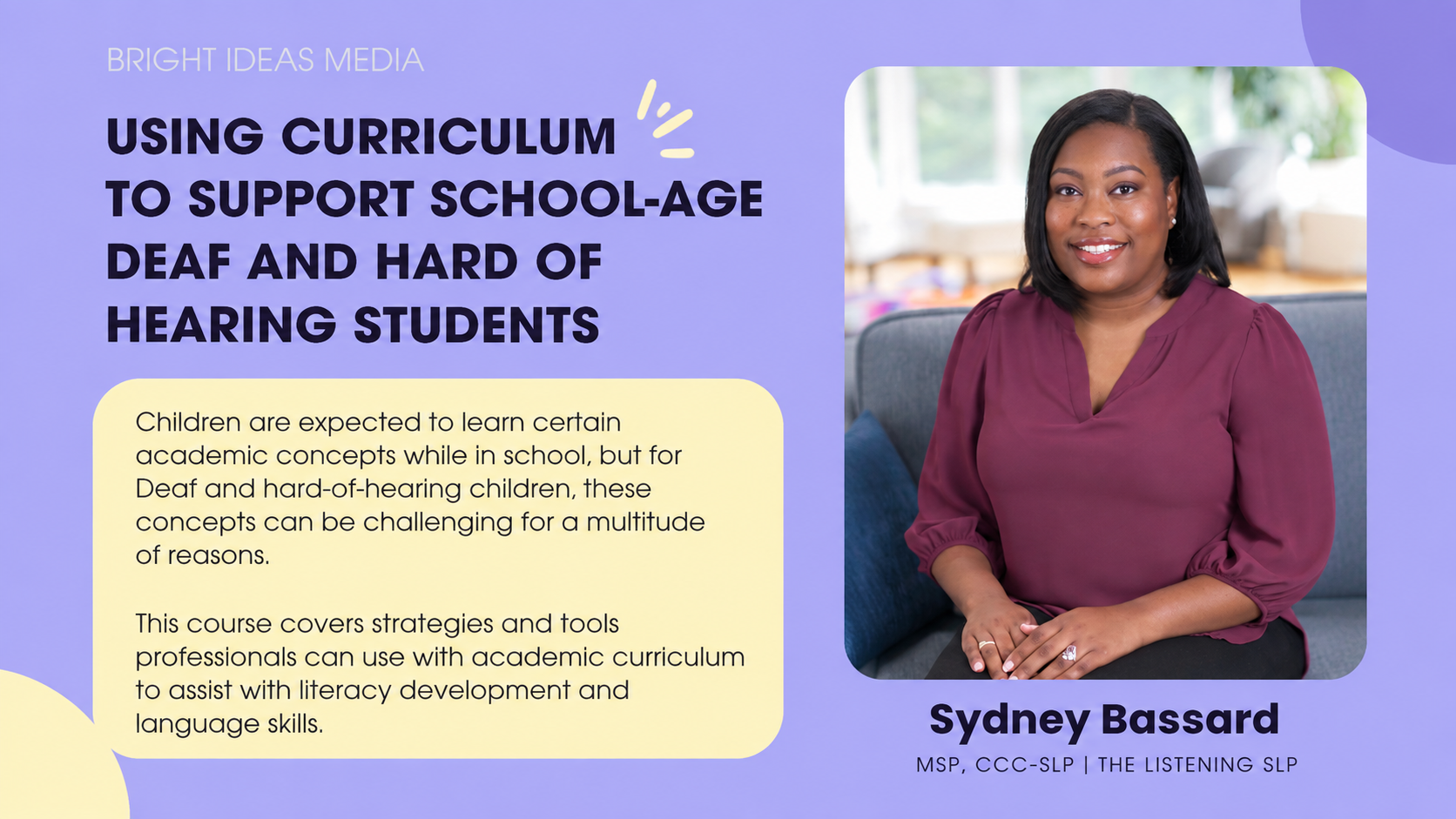
Using Curriculum to Support School-Age DHH Students (presented by Sydney Bassard, MSP, CCC-SLP) is built for practitioners who already understand the basics of DHH support and want to go further into curriculum.
It includes working through how to evaluate whether a DHH student has genuine access to grade-level content (not just a seat in the room), how to adapt instructional materials without watering down expectations, and how literacy development for DHH learners intersects with the broader curriculum decisions schools make every day. It's designed to give SLPs and educators a concrete way to move from "this student needs support" to "here's exactly what that support looks like in this unit, this week."
Who It's For
School-based SLPs, special educators, and general education teachers who have DHH students on their caseload or roster and want curriculum-level strategies (not just communication accommodations) will get the most out of this course. It also pairs naturally with anything you took away from the episode with Germaine Graham we spoke about in our Sept. 3 post: that conversation covers the family and therapy side of DHH support, and this course covers what happens once that student walks into a classroom.
Get the Handout, Then Go Deeper
Use the free bonus handout (found in the course's resource section) for the what; then in the full course, Sydney walks through the how, not just the what.
If you're weighing whether this course belongs on your professional development list: curriculum access is one of the areas most DHH training genuinely skips. Plenty of resources cover communication strategies and classroom accommodations, but far fewer walk through how to evaluate a unit, a text, or an assignment and decide what needs to change to keep it both accessible and rigorous.
That's the gap this course is built to close, and it's a skill that transfers across every grade level and subject a DHH student moves through - not a one-time fix for a single class.