What Masking Costs Kids Over Time
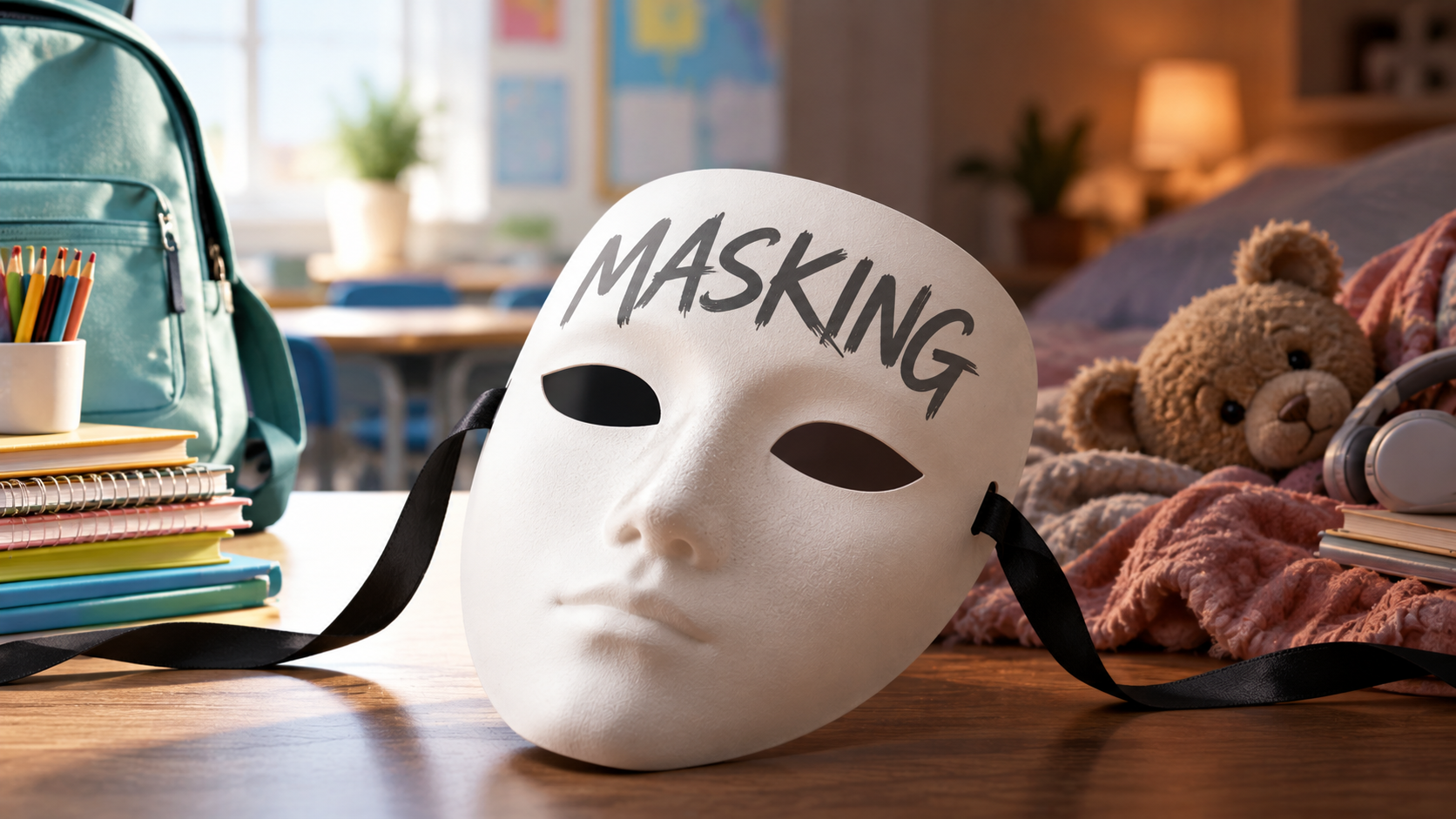
Picture it. Any school USA…
A parent comes to a meeting worried about their child. They describe meltdowns every evening, battles to get out the door in the morning, a kid who comes home and goes completely silent for hours. The school team listens, reviews their notes, and says: “We’re not seeing any of that here.”
Both sides are telling the truth. And both pieces of the picture matter.
Dr. Destiny Huff, licensed professional counselor and certified trauma therapist, explains it this way in her course The Cost of Masking:
“They are putting all of their energy into those four, five, six, eight hours that they’re in that school building. And when they’re at home, that’s their safe place and they’re decompressing. And when they’re decompressing, the mask is coming off — and all the dysregulation they’re holding in is coming out.”
The school isn’t lying. The parent isn’t lying. What’s happening is that the child is spending everything they have just to hold it together, and home is the only place safe enough to fall apart.
This is what masking costs.
The research is clear: chronic masking is linked to depression, anxiety, and what’s called autistic burnout. Burnout happens when chronic life stress, combined with the gap between expectations and a child’s actual capacity, results in exhaustion, loss of function, and reduced tolerance to stimuli. It typically sets in after three or more months of sustained effort, which, if you do the math, maps almost perfectly onto a school year.
What it looks like in real life + A Bonus Resource
Jasmine is an autistic third grader. Her teachers describe her as “well-behaved.” She mimics her peers during group work and engages appropriately. But at home? She often doesn’t speak at all, not because something happened, but because she’s spent all day performing and there’s nothing left.
Malik is a high schooler with ADHD. He sits quietly in class and doesn’t ask for help. He’s been labeled lazy when work isn’t turned in. But what’s actually happening is that he learned early on that speaking up got him labeled “disruptive”, so he stopped.
“It’s often easier for them to appear as the lazy one, or the one that just doesn’t do anything or doesn’t turn anything in, than to be the quote-unquote ‘dumb one’ that doesn’t understand. They would rather be labeled as just being lazy than admitting, they don’t understand and they need help.”
That’s a hard one. A child choosing to accept one damaging label in order to avoid a more painful one.
When masking starts to fade, it doesn’t always look like what we expect. It can appear as stomachaches and headaches before school, grades slipping, or a kid who used to love math class and suddenly doesn’t want to participate. Other signs include difficulty making it to school which gets viewed as an “attendance problem” rather than being understood as a sign of overload. Some children withdraw from things they usually enjoy. The mask thins, slowly, until the child no longer has the capacity to hold it up.
School refusal, meltdowns, and shutting down often get labeled as misconduct, non-compliance, or a code of conduct issue, all while the root cause goes unaddressed.
Something else to keep in mind: The quiet, compliant kid is not necessarily a thriving kid.
“A learner who is always quiet may not feel safe speaking. A learner who seems compliant may be suppressing discomfort or needs. A learner who appears shy or disengaged may be experiencing burnout. A learner who says ‘I’m fine’ may have been conditioned to believe their needs are burdensome.”
Compliance isn’t wellness. Quiet isn’t contentment. “Fine” isn’t always fine.
So what do we do?
The answer is neuro-affirming practice, creating environments where neurodivergent kids don’t have to spend energy hiding who they are. This looks like sensory tools that are accessible without a child having to ask, communication preferences that are honored rather than corrected, collaborative problem-solving that actually involves the learner, and peers being taught to support neurodivergent strengths rather than just neurodivergent kids being taught to appear neurotypical.
It also means asking better questions. Not just “how are they doing in class?” but “Is this their typical behavior? Is this what they’re like at home? What does their authentic self look like?”
The goal is to support learners so they can be “successful as their authentic selves, not just quiet participants.”
That’s the work.
Are you or someone you know questioning whether a child is masking? Download the bonus checklist.