Why We're Spending September on Deaf Awareness
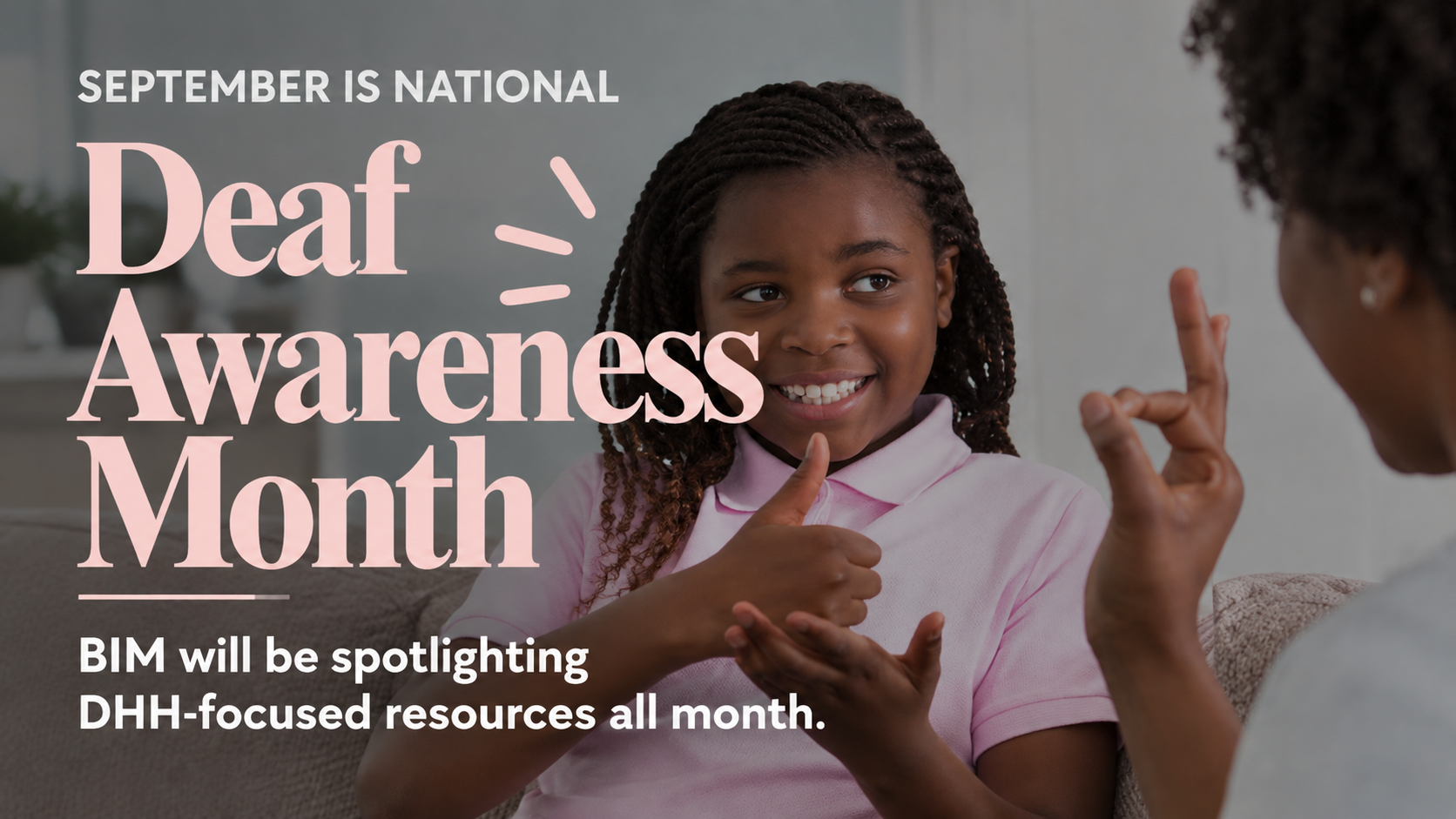
Every September, the Deaf community and the professionals who work alongside it mark National Deaf Awareness Month - a monthlong observance that grew out of the World Federation of the Deaf's International Week of the Deaf, first established in 1958 to promote the rights, language, and culture of Deaf people worldwide.
In the United States, that week-long recognition expanded into a full month in 1997, and it's stuck ever since, typically closing out with International Week of Deaf People and International Day of Sign Languages in the observance's final days.
For SLPs, teachers, and other school-based professionals, this isn't just a calendar note. Deaf and hard-of-hearing (DHH) students show up on caseloads and rosters in every district, and the research is consistent: the biggest predictor of a DHH child's long-term academic and social success isn't the degree of hearing loss itself; it's whether the adults around them understand how to communicate, include, and advocate. That's a skill set, and like any skill set, it can be learned.
What We Built For The Month
We've put together a full month of content because one carousel post can't cover what DHH-competent practice actually requires. Here's what's covered:
- A follow up on our episode with Germaine Graham, M.S., CCC-SLP, bilingual ASL-English speech-language pathologist and founder of Deafinitely Communicating.
- Classroom and therapy-room habits that make the biggest difference.
- Insights from a guest author/deaf blind audiologist service provider
Why It's Worth Following Along
None of this is meant to make you a Deaf culture expert overnight. It's meant to close the most common gaps and highlight the terminology that trips people up, the classroom habits that unintentionally exclude DHH students, and the curriculum decisions we make that either open doors or close them. Whether you're an SLP, a classroom teacher, a related-service provider, or an administrator, there's something in this series built for your caseload.
It's also worth saying plainly DHH support isn't one skill; it's several skills stacked together. A single social post can only ever cover one layer at a time. Splitting the topic across a month lets us go deeper on each piece instead of skimming all of them at once, and it gives you an opportunity to share your thoughts and experiences with us as well.