Insights & Tips for Educators & Therapists
Gain valuable insights and practical tips to support your work as an educator, speech-language pathologist, or special education professional. Connect with a global community, explore innovative strategies, and stay informed with the latest trends in education and therapy.
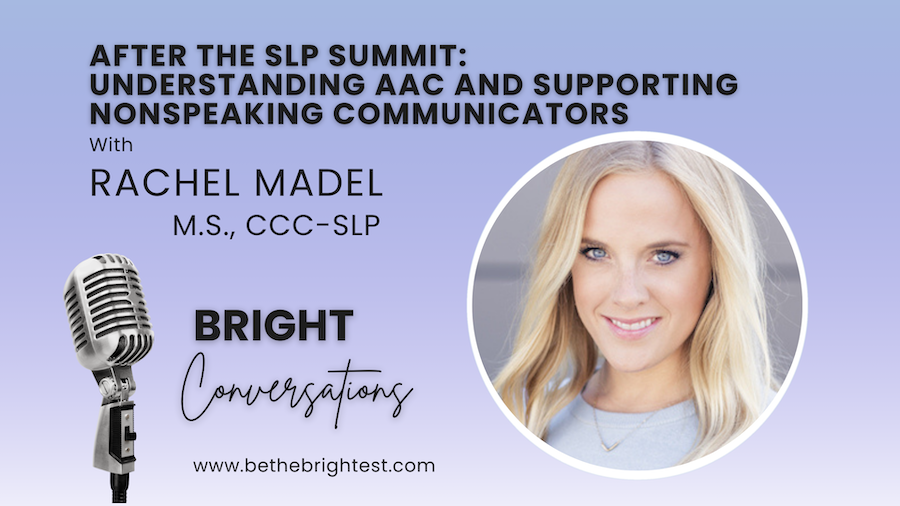
After the SLP Summit: Understanding AAC and Supporting Nonspeaking Communicators
What does it really mean to support nonspeaking communicators? In this episode of Bright Conversations, AAC advocate Rachel Madel joins Shontaye Glover Jones to unpack the role of augmentative and alternative communication in therapy. From visual supports to communication devices, this conversation encourages clinicians to expand their understanding of communication and meet students where they are.
READ MORE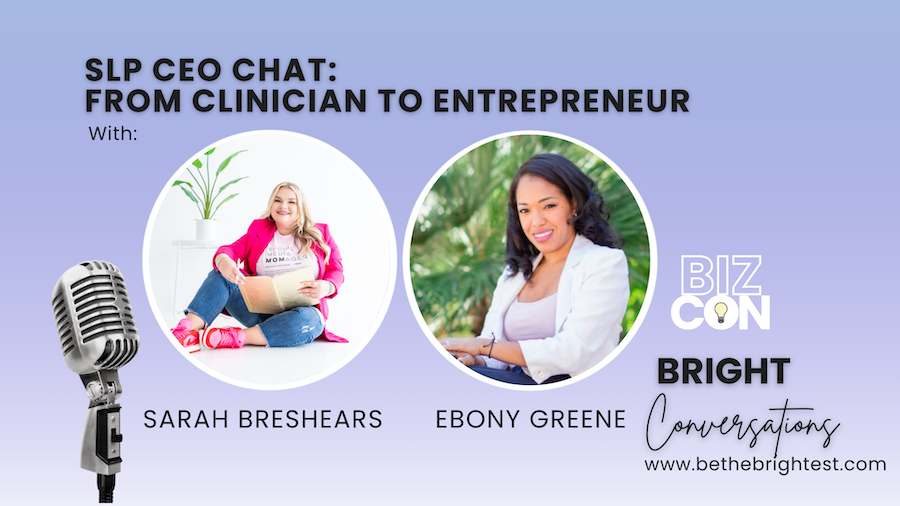
SLP CEO Chat: From Clinician to Entrepreneur
What happens when speech-language pathologists step beyond traditional clinical roles and embrace entrepreneurship? In this episode of Bright Conversations, Ebony Greene and Sarah Breshears share how they built thriving businesses using their clinical expertise. Their journeys reveal how mentorship, community, and a willingness to learn the business side of healthcare can open entirely new opportunities for SLPs.
READ MORE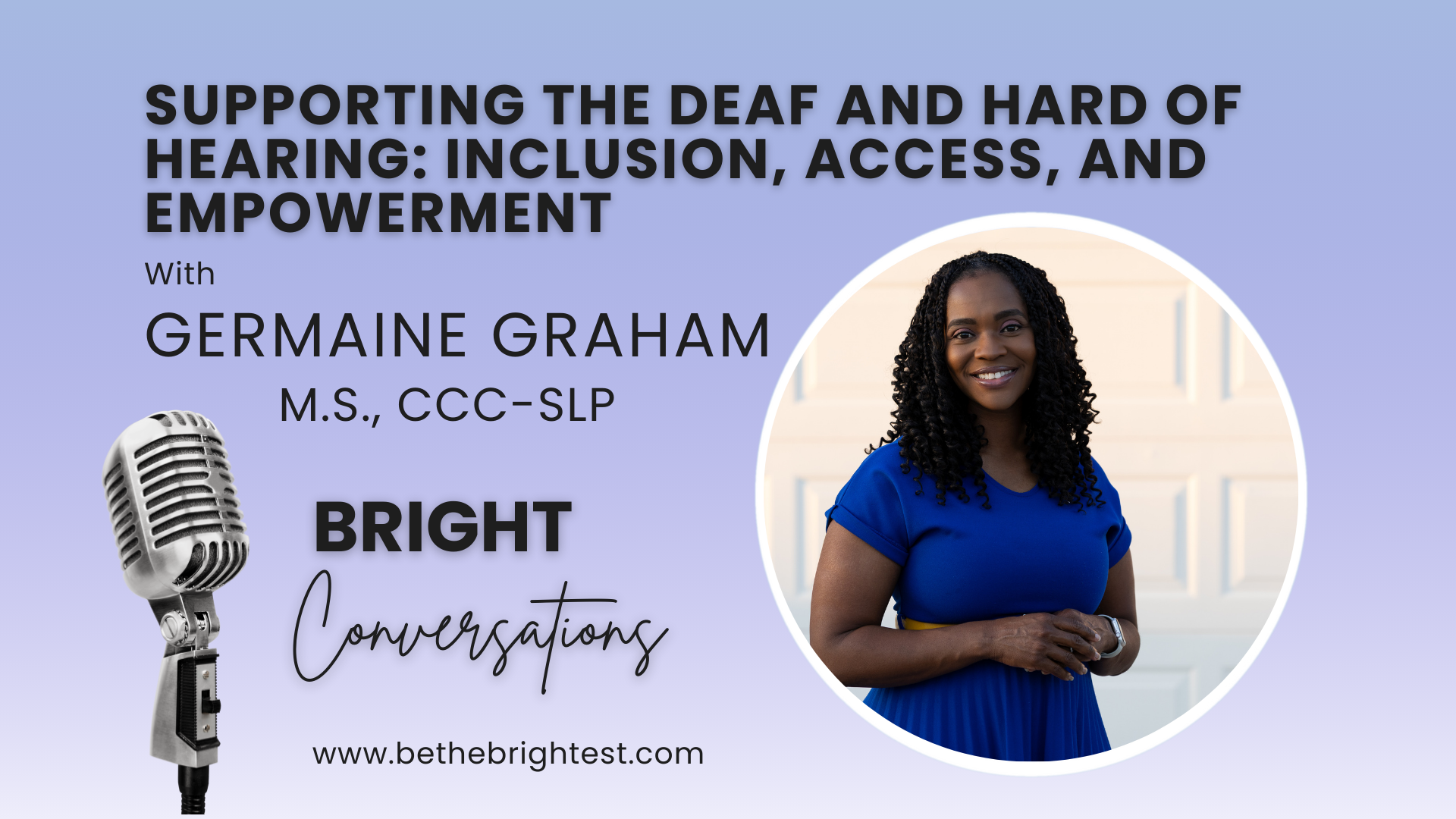
Supporting the Deaf and Hard of Hearing: Inclusion, Access, and Empowerment
True inclusion goes beyond awareness—it requires action, understanding, and intention. In this episode of Bright Conversations, Germaine Graham joins Shontaye Glover Jones to unpack what it really means to support Deaf and Hard of Hearing individuals through access, representation, and empowerment. A must-listen for anyone working to create more inclusive, affirming spaces.
READ MORE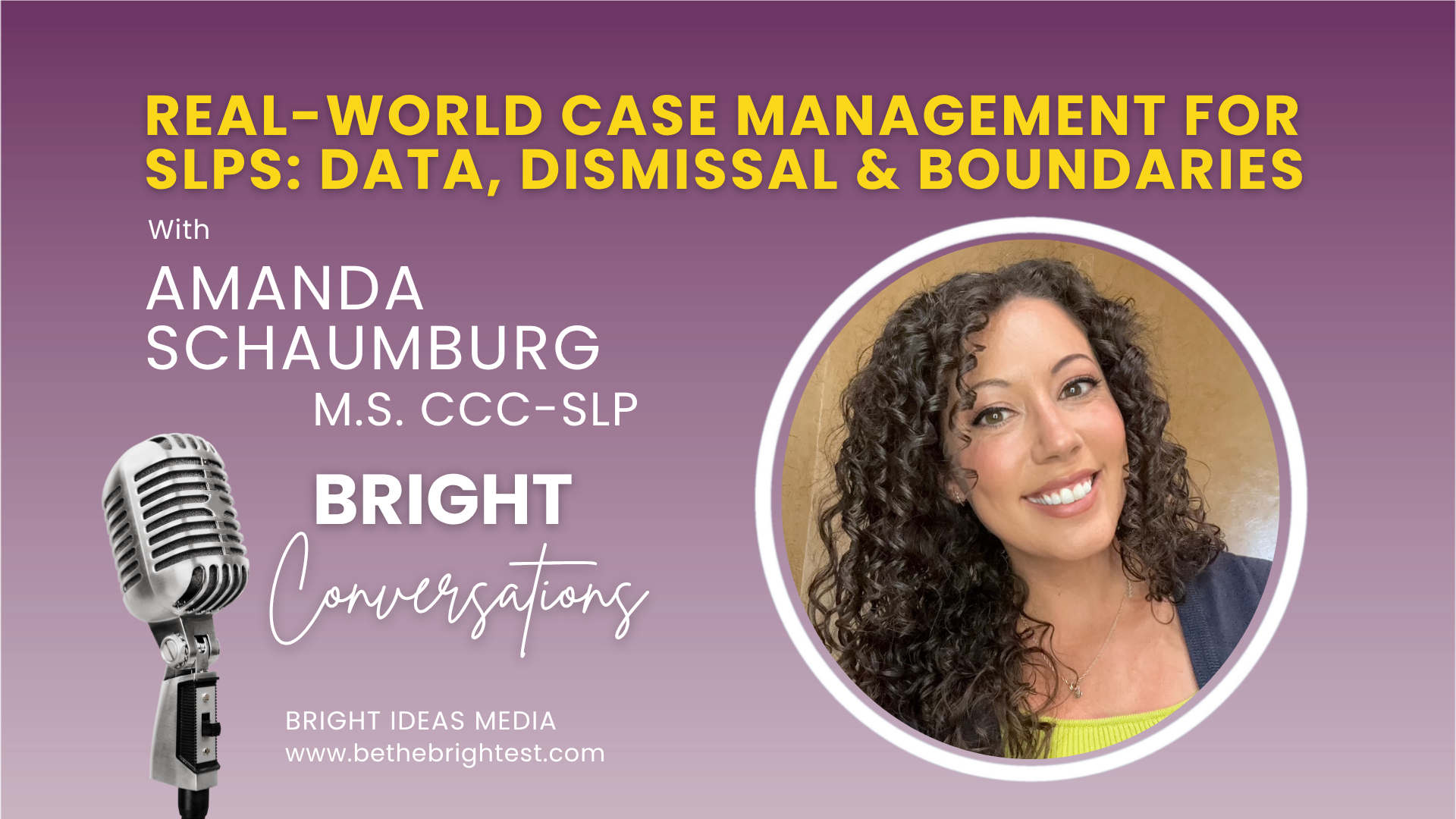
Real-World Case Management for SLPs: Data, Dismissal & Boundaries
In this episode of Bright Conversations, we’re talking about the real work of school-based SLPs—case management, data collection, boundaries, and burnout. Host Lisa Kathman is joined by Amanda Schaumburg, Texas-based SLP, private practice owner, and the creator of Panda Speech Publishing. Amanda shares her unconventional love for writing IEPs and offers tips for navigating the heavy (and often overlooked) case management responsibilities that come with school-based roles. She breaks down how she writes over 230 IEPs a year, manages a team of therapists, and still finds joy in the paperwork side of speech-language pathology. Whether you're a new SLP or a seasoned pro looking for practical strategies and mindset shifts, this episode offers empowering insights and real talk about what it means to create sustainable systems and boundaries in schools.
READ MORE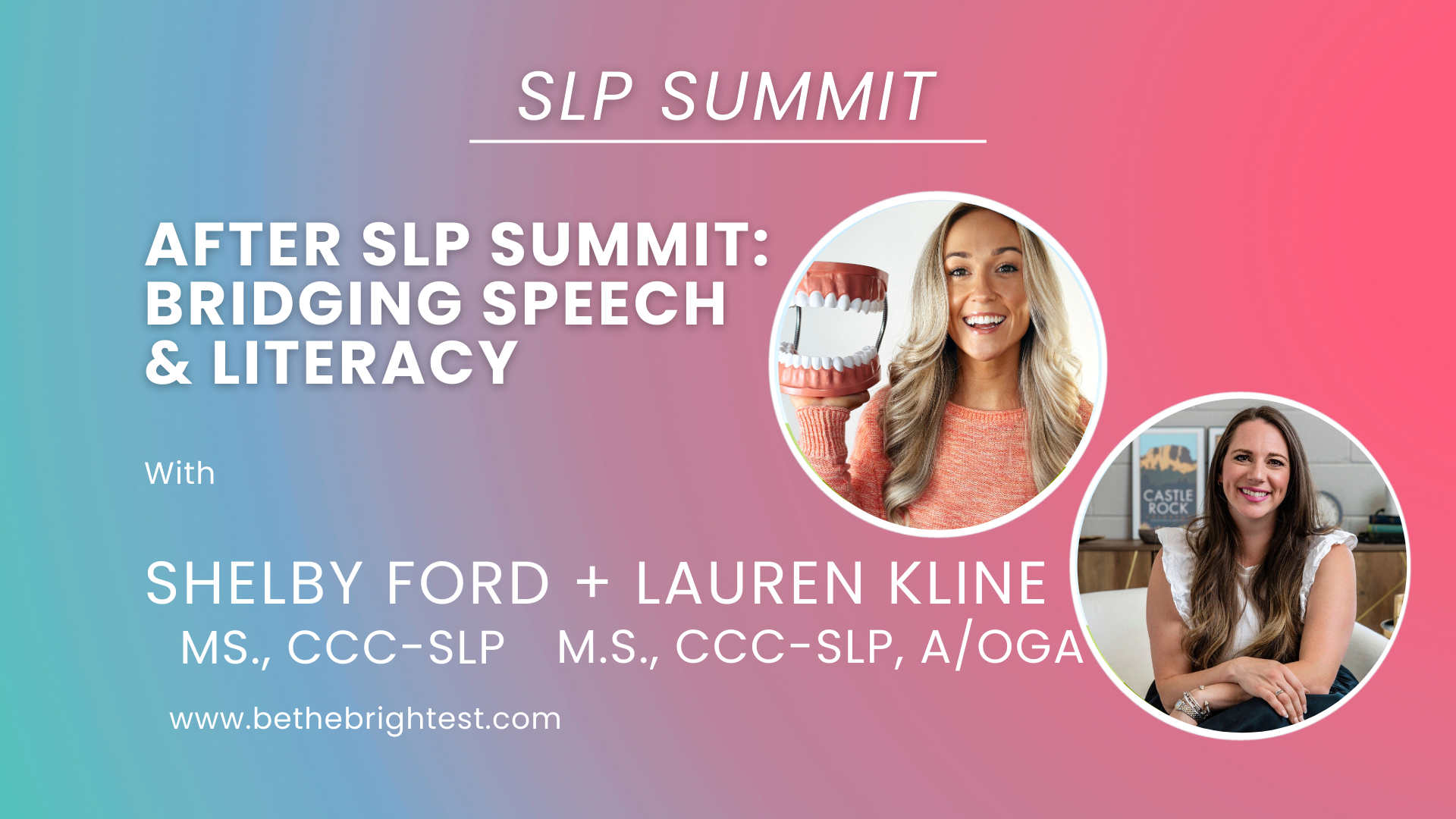
After the Summit: Bridging Speech and Literacy
What happens when speech and literacy stop living in separate boxes? In this Bright Conversations episode, Lauren Kline and Shelby Ford break down how connecting speech sound intervention with structured literacy leads to more meaningful progress for students. Packed with real-world strategies and Summit-inspired insights, this conversation is a must-read for SLPs across settings.
READ MORE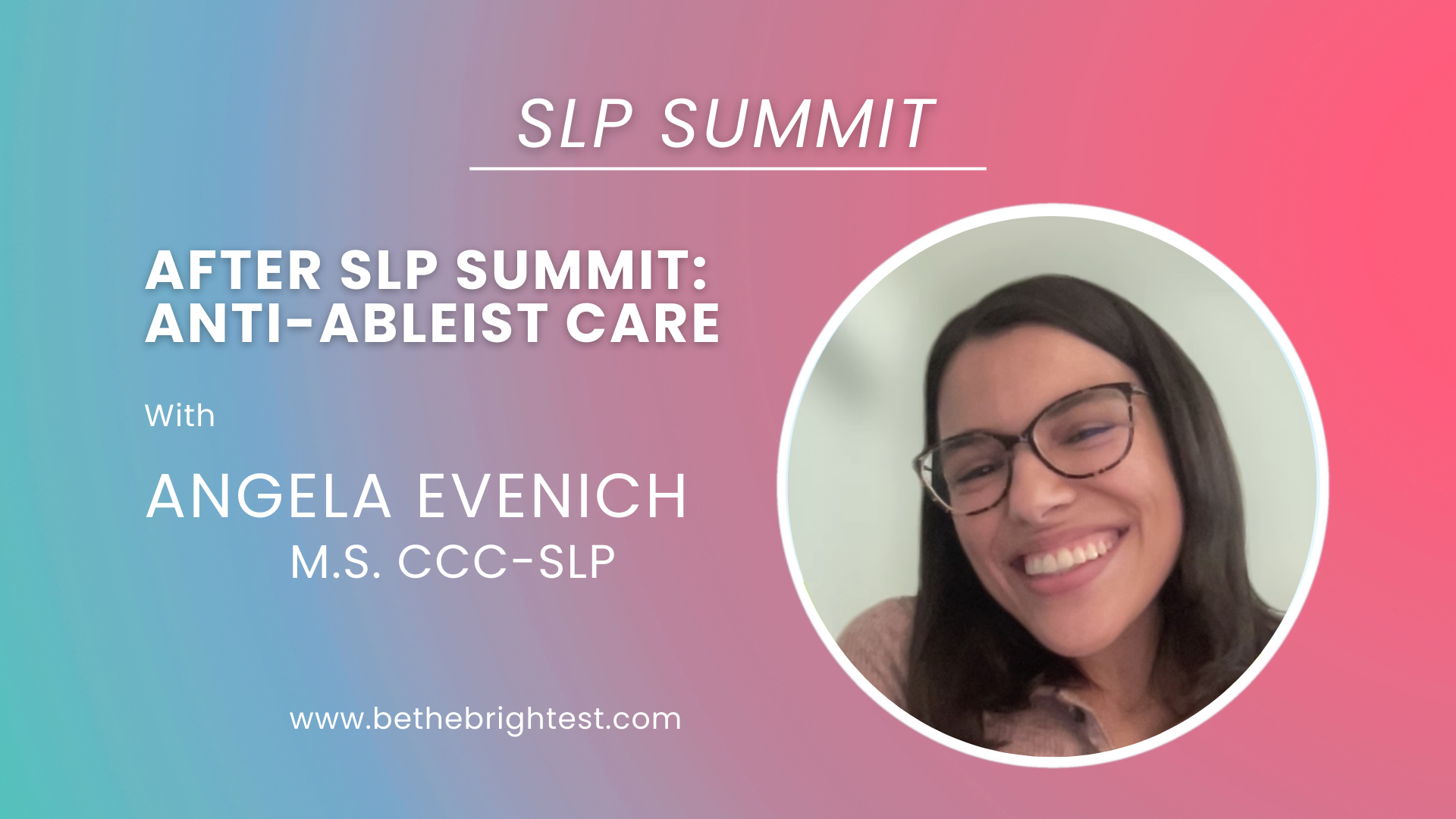
After the Summit: Anti-Ableist
In this follow-up conversation, Angela shares her lived experience navigating the field of speech-language pathology as a disabled professional and discusses how ableism—both implicit and explicit—shows up in clinical practice, therapy spaces, and educational systems. She breaks down what it means to offer truly anti-ableist care, why representation matters, and how clinicians can move from intention to action when it comes to disability inclusion.
READ MORE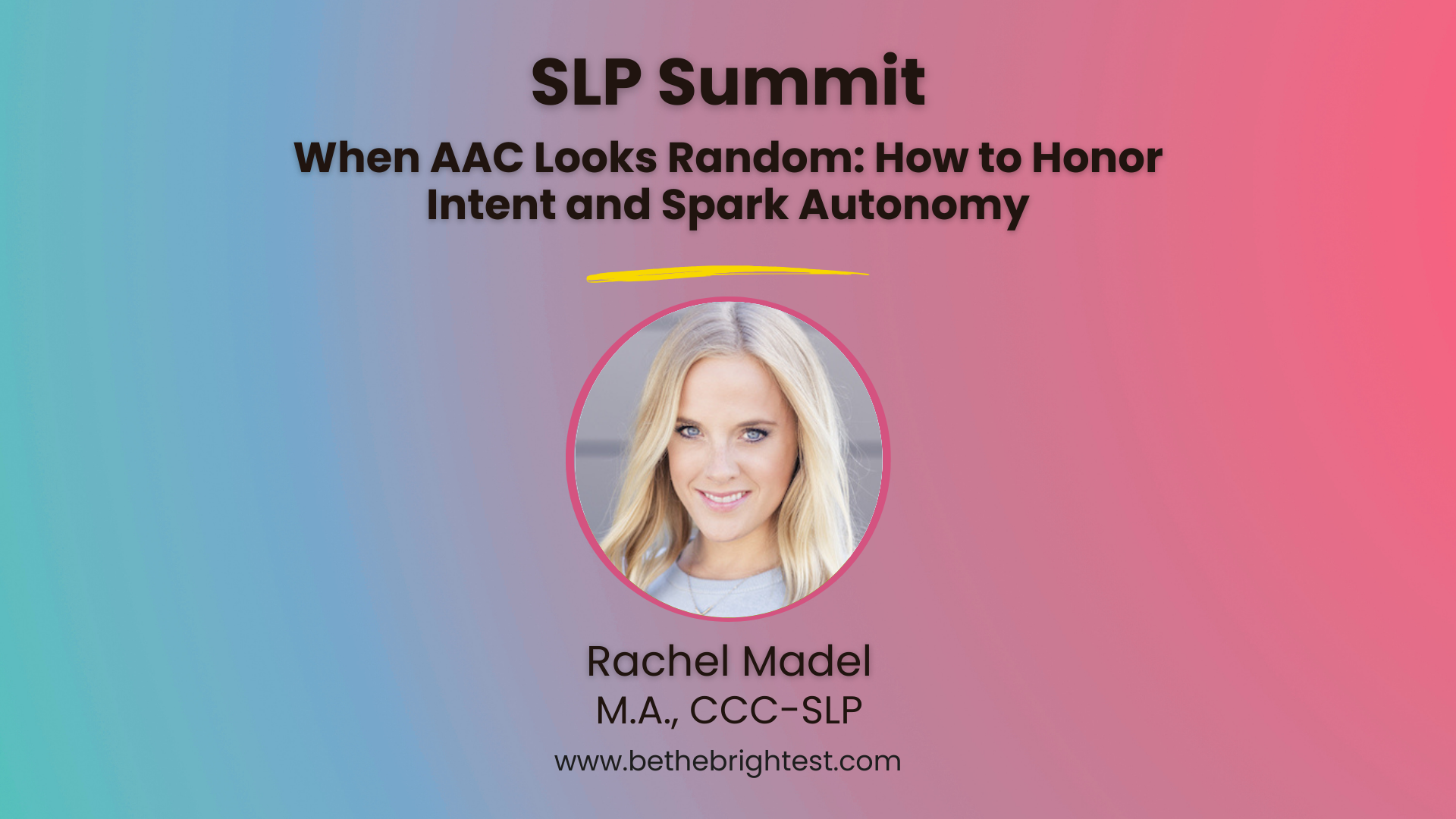
When AAC Looks Random: How to Honor Intent and Spark Autonomy
When AAC use looks random, it’s often communication in progress. This SLP Summit session reframes unexpected AAC output through a neuro-affirming lens, helping clinicians better understand regulation, intent, and meaning in AAC use.
READ MOREJoin Our Email List
Sign up to be the first to know about new events, course launches, exclusive discounts, and practical insights to support your professional growth.
Thank you for subscribing!
Have a great day!